
A copper still hidden up a steep hollow has become one of America’s most enduring images. But the history of moonshine in Appalachia is bigger than a jar with a handwritten label and bigger than the old tale of somebody outrunning the law on a dirt road. It is a story about farmers trying to make a living, families guarding hard-earned know-how, government taxes, mountain pride, and a culture that never cared much for being talked down to.
Moonshine was not born because Appalachian people were looking for trouble. For many folks, it began as practical business in country where cash could be scarce, roads could be rough, and a good crop could spoil before it ever reached town. That does not make illegal distilling harmless or romantic in every case. It does explain why the practice took such a firm hold, and why its memory still runs deep from the Blue Ridge to the Cumberland Plateau.
Before Moonshine Had a Name
Distilling came to the American frontier with settlers who brought knowledge from the British Isles and continental Europe. Scotch-Irish, English, German, and other immigrant families all contributed to America’s early distilling traditions. Grain was plentiful in many mountain communities, but getting bushels of corn or rye over muddy roads and across steep ridges was another matter entirely.
Turning grain into whiskey made it easier to transport and, at least in theory, easier to sell. A farmer could haul a smaller, more valuable product than wagonloads of corn. Spirits also had a place in local commerce, medicine cabinets, and social life long before federal rules put a bright line between licensed whiskey and untaxed liquor.
The word “moonshine” eventually became a catch-all for illegally made distilled spirits, especially those produced by the light of the moon to avoid notice. Folks in the mountains had other names for it too: white lightning, mountain dew, corn liquor, and plenty more that depended on which creek you grew up near. The name changed. The central idea did not – make something useful from what the land provided.
Taxes Lit the Fuse
The first major clash came early in the nation’s history. In 1791, the federal government placed an excise tax on distilled spirits to help pay debts from the Revolutionary War. That tax led to the Whiskey Rebellion, centered largely in western Pennsylvania, but the resentment traveled well through frontier country.
To a small farmer, a whiskey tax could feel like a punishment for living far from markets and making do with what he had. To federal officials, taxation was a matter of law and national finances. Both things could be true, and that is where the trouble lived.
The tax was repealed in 1802, but whiskey taxes returned during the Civil War as the federal government sought revenue. Enforcement grew stronger after the war, particularly in parts of the South and Appalachia where unlicensed distilling had continued. Revenue officers became known in local speech as “revenuers,” a word that could still make an old-timer squint a little.
The fights were real, and some turned violent. Still, the popular legend of every mountain family battling the government with a rifle in one hand and a jug in the other is mostly Hollywood seasoning. Many Appalachian people never made liquor. Many paid taxes, farmed, mined, logged, preached, taught school, or worked whatever honest job could be found. The moonshining story belongs to the region, but it does not define every soul who ever called the mountains home.
The History of Moonshine in Appalachia Was About Survival
After the Civil War, much of Appalachia faced punishing poverty, limited land, and weak access to cash markets. A still could offer income when a crop brought too little or a local job disappeared. In isolated places, it could become part of an informal economy built on trust, kinship, and keeping your business to yourself.
That secrecy was not just colorful backwoods theater. An illegal operation could bring fines, jail time, confiscated property, and danger for an entire household. Families had good reason to be cautious about outsiders asking too many questions. A person’s reputation mattered. If you gave your word, you kept it. If a neighbor needed help, you helped. If somebody brought trouble to the hollow, folks remembered.
Women were part of this history too, though they are often missing from the tall tales. They managed households, worked farms, protected family secrets, and in some cases took active roles in the business. Moonshine history is full of men with colorful nicknames, but mountain women carried plenty of the labor and the consequences.
There was also a plain economic contradiction at work. The government wanted tax revenue. Rural families wanted a way to turn local crops into money. When legal permits, transportation, and capital were out of reach, some people chose an illegal path. That choice had risks and consequences, but it did not spring from laziness or some cartoonish “hillbilly” instinct. Good Lord, mountain people have never needed anybody’s permission to work hard.
Prohibition Changed the Whole Game
When national Prohibition began in 1920, it did not create moonshine. It did, however, expand the market for illegal liquor across the country. Demand rose in cities and towns far beyond Appalachia, and organized criminal networks entered the picture alongside local producers.
That era helped create many of the chase stories Americans still love. Drivers modified cars for speed and hauling capacity, trying to move liquor without attracting attention. The connection between bootlegging and early stock-car racing is no campfire yarn. Some drivers did use their skills and altered vehicles in ways that helped shape racing culture, though the history is more varied than the neat version told on souvenir T-shirts.
Prohibition ended in 1933, but illegal distilling did not vanish. In some communities, the legal system remained expensive or difficult to navigate, and untaxed liquor could still bring more money than a legal operation. Enforcement continued, as did the cat-and-mouse game. The shine business had become part of American folklore, but for the people involved, it could mean real pressure, real loss, and real hard choices.
From Hidden Stills to Legal Distilleries
Today, Appalachia’s moonshine heritage wears two different hats. One is historical and personal: family stories, old songs, battered tools, recipes remembered in broad strokes, and a healthy suspicion of somebody claiming their granddaddy invented the whole thing. The other is legal, regulated distilling.
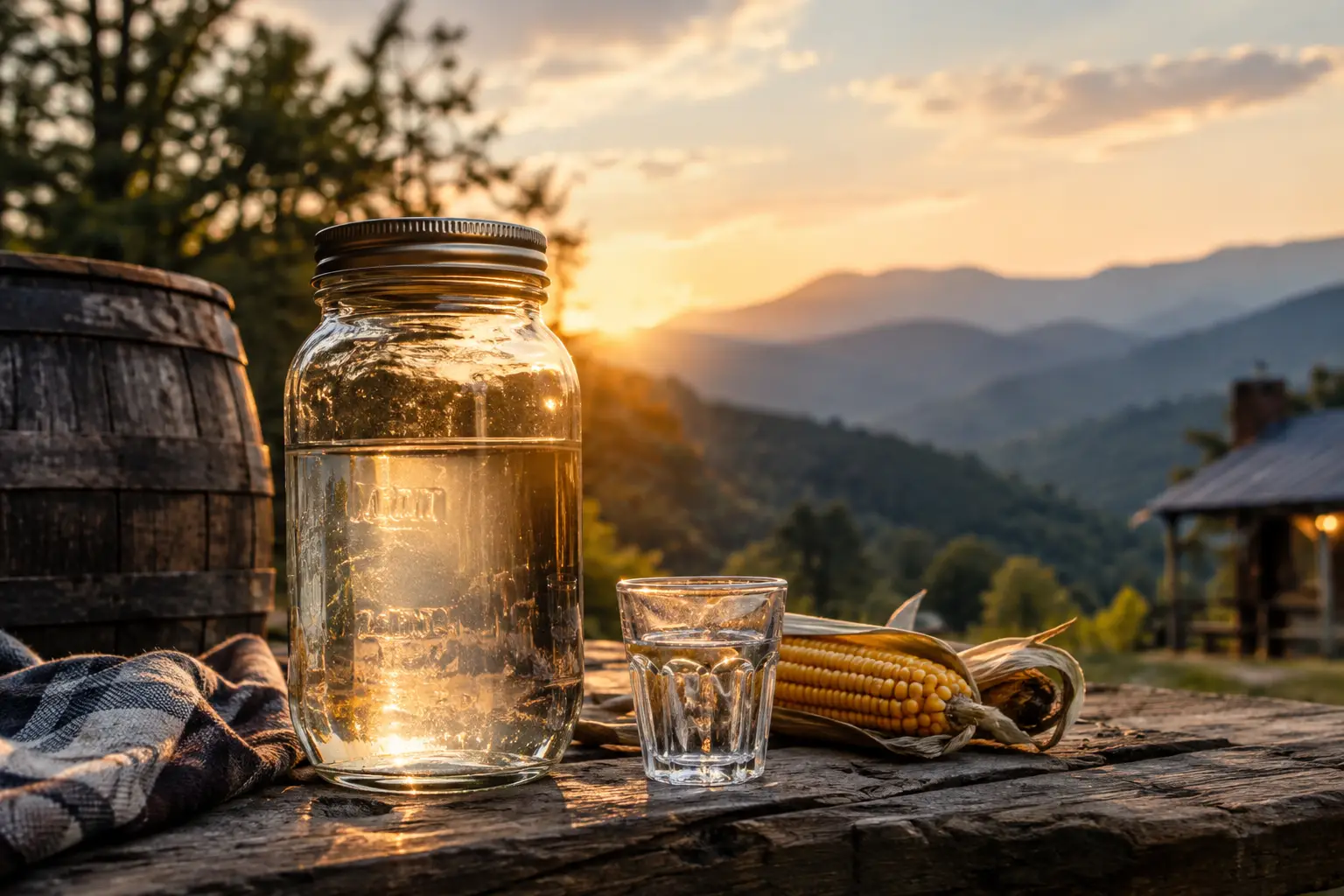
Modern Appalachian distilleries make lawful spirits under licensing, safety, labeling, and tax requirements. That difference matters. Legal distillers preserve regional flavors and celebrate local grain, craftsmanship, and storytelling without asking customers to ignore the law or gamble with unsafe alcohol. A clear jar on a shelf may nod to the past, but it is not the same thing as a hidden still in the woods.
Some folks bristle when big brands polish moonshine into a costume. Fair enough. Heritage deserves better than a fake accent slapped on a mason jar. But legal distilleries can also create jobs, support farmers, bring visitors to small towns, and give younger generations a way to carry regional traditions forward in the open.
The best ones understand that the story is not just about rebellion. It is about ingenuity. It is about making a way when there was not much of one. It is about communities that learned to rely on skill, kin, and grit when the map showed plenty of mountains but not many opportunities.
What the Jar Really Holds
Moonshine’s place in Appalachian history should be remembered with both pride and clear eyes. It is a heritage shaped by resourcefulness, but also by laws that carried consequences. It gave rise to legends, yet it involved everyday people trying to feed families and hold onto a measure of independence.
That is why the story still matters. The old mountain wisdom behind it says something bigger than liquor: know your craft, take care of your people, and do not let outsiders mistake a quiet life for a simple one. Backwoods America can raise a respectful glass to that kind of grit – the legal kind, y’all – and keep the real stories alive for the next generation.