

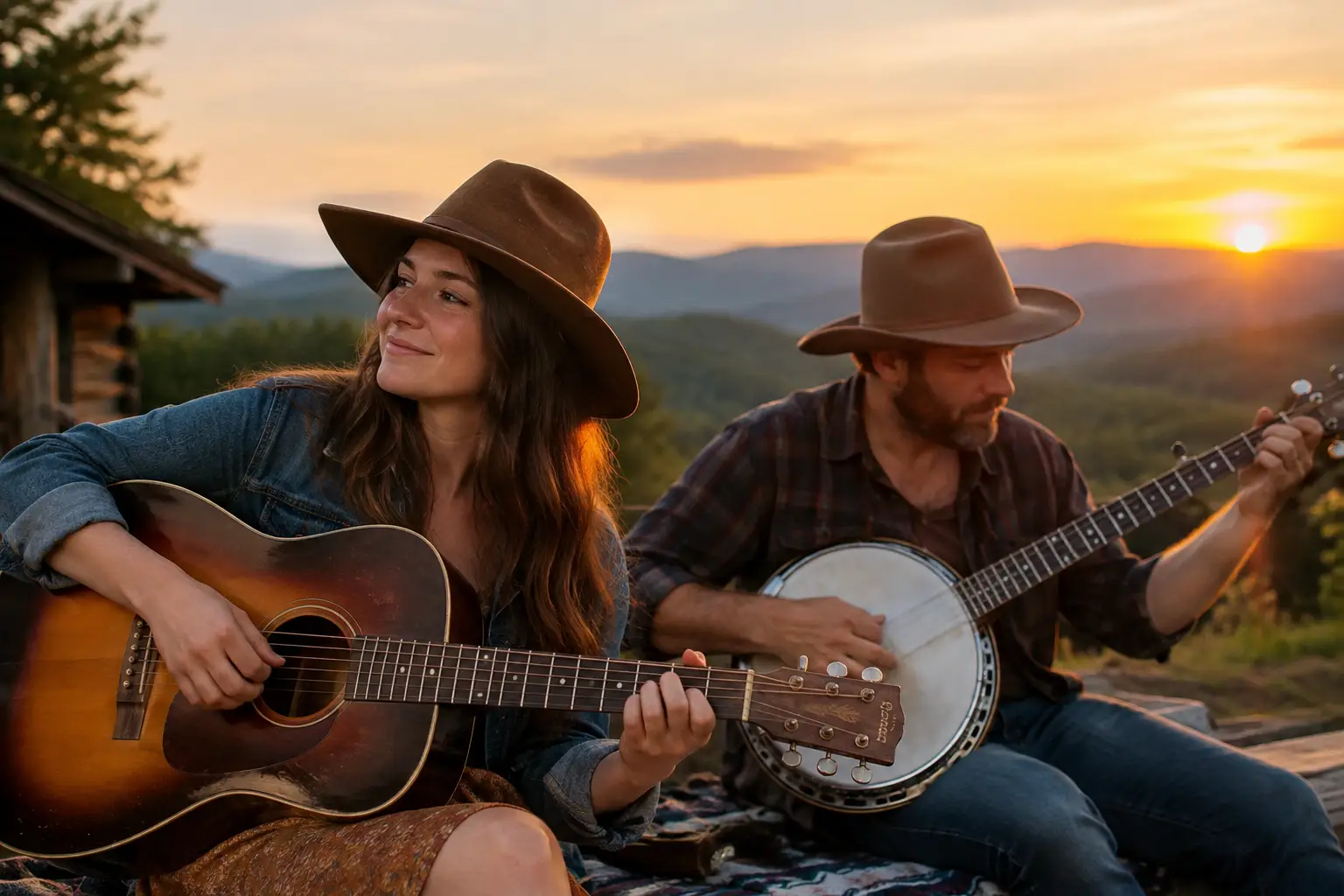
A fiddle starts sawing out a tune, somebody finds the rhythm on a battered old banjo, and before long a room full of folks is tapping boots like they were born knowing the steps. That is the power of Appalachian folk music. It does not need a stadium, smoke machines, or a fella in skinny jeans hollering about dirt roads. Give it a porch, a kitchen, a church social, or a festival field, and it will do what it has always done: bring people together.
This music comes from the hills, sure, but its reach runs far beyond them. You can hear its fingerprints in bluegrass, old-time, country, gospel, Americana, and plenty of songs played by folks who may never have crossed the Blue Ridge. It carries stories of hard work, heartbreak, faith, humor, family, and the stubborn kind of hope that keeps a person moving when the road gets steep.
Appalachian Folk Music Was Built by Many Hands
Folks sometimes talk about mountain music as though it appeared fully formed in a cabin somewhere, handed down neat and tidy from one group of people. Truth is, the story is bigger, richer, and more American than that.
Appalachian communities carried musical traditions from the British Isles, including English, Scottish, and Irish ballads and fiddle tunes. But those traditions met the musical knowledge of African Americans, Indigenous people, and other working families who lived, traveled, traded, worshipped, and made music throughout the region. The result was not a museum piece. It was a living sound built around shared experience.
The banjo tells that story better than most instruments. Its ancestors came from West Africa, and Black musicians played a vital role in shaping early American banjo traditions. In Appalachian music, the banjo became a driving force – sometimes bright and rowdy, sometimes lonely enough to make the hair stand up on your arms. Pretending otherwise would leave out a mighty important part of the music’s family tree.
That mix is part of what makes the tradition so powerful. A centuries-old ballad could travel across an ocean, settle in a mountain hollow, pick up new verses, new rhythms, and new meaning, then become somebody else’s family song. Ain’t that the truth about America at its best? We make room at the table, and sometimes the table starts singing.
The Sound Is Plainspoken, Not Simple
Appalachian folk music can sound straightforward to a first-time listener: fiddle, banjo, guitar, mandolin, dulcimer, maybe a bass thumping along. But simple is not the same as easy.
Old-time fiddle tunes often rely on repeating phrases that pull dancers into a steady groove. The banjo may answer with clawhammer rhythm, where the hand strikes and brushes strings in a pattern that feels like a wagon rolling over packed dirt. A singer might stretch a line just behind the beat, while another voice rises up in harmony rough around the edges and honest as a fence post.
Then there are the ballads. Some are long, plain stories of love, loss, betrayal, murder, war, or wandering. They do not always wrap things up with a clean little bow. Life rarely does. A good ballad lets the listener sit with the trouble for a while, the same way folks used to sit near the stove after supper and tell a story until everybody had gone quiet.
The mountain dulcimer brings another flavor: soft, ringing, and a little mournful. Gospel songs add four-part harmony and the kind of conviction that can make even a hardheaded fellow look down at his boots. Each piece has its place. The beauty is in how the parts make room for one another.
A Tune Was Often a Tool for Living
Before recorded music put every song on demand, people made their own entertainment. More than that, they used music to pass along history, ease loneliness, mark a wedding, comfort a grieving family, get through a long workday, or give young people an excuse to gather where the grown-ups could keep an eye on them.
A song could carry news from one community to the next. It could preserve a family memory after the people who first lived it were gone. It could teach a child the sound of home. That is why these tunes matter. They were not background noise. They were part of the household.
Why the Tradition Still Hits Home
Modern life has made it easy to hear anything and harder to truly listen. Appalachian folk music asks something different of us. It asks us to slow down long enough to hear a bow scrape, a breath before a verse, or the little laugh somebody lets out when they miss a chord and keep right on going.
That human roughness is not a flaw. It is the point.
A polished recording can be wonderful, but a front-porch tune played by regular folks has a different kind of value. Nobody has to be famous. Nobody needs fancy gear. If you know two chords, one song, or one dance step, you can be part of the evening. In a country that sometimes feels too busy to borrow a cup of sugar from next door, that kind of belonging is worth protecting.
It also speaks to people who left home. Plenty of folks moved away from Appalachia for work, school, military service, or simply a new start. Then a fiddle tune comes through the speakers, and suddenly they can smell rain on gravel, hear screen doors slamming, and picture an auntie stirring beans on the stove. Good Lord, music can haul a whole childhood across state lines in three minutes flat.
Keeping the Music Alive Without Freezing It in Time
Preserving tradition does not mean locking it behind glass and telling young musicians not to touch it. That is how a living thing gets turned into a dusty display.
The best musicians learn the old tunes, respect where they came from, and then carry them forward honestly. Some stay close to traditional arrangements. Others blend old-time music with new songwriting, rock, blues, jazz, or country. It depends on the artist and the setting. Not every experiment will land, and not every fresh version will be for everybody. That is alright. The old songs have survived worse than a few opinions at the festival campground.
What matters is credit, care, and curiosity. Learn the names of the musicians and communities who kept the music alive. Give Black banjo traditions their due. Respect the elders who remember verses nobody wrote down. Buy a local musician’s record, tip the band, attend a jam, or bring the kids to a community concert instead of letting heritage become something they only see on a T-shirt.
How to Hear It the Right Way
There is no fancy rulebook, but there is a better way to show up. Listen before you jump in. At a jam, ask whether it is an open circle and follow the lead of the regular players. At a dance, watch a set before charging onto the floor like a loose mule. If a musician tells a story about where a song came from, pay attention. Those details are part of the tune.
And if you are just getting started, begin with live music when you can. Sit close enough to see the hands. Notice how players communicate with a glance or a nod. Hear how a room changes when everybody joins a chorus they have known for years. Recordings can teach you the songs, but people teach you the tradition.
More Than Mountain Music
Appalachian folk music belongs to the mountains, but it does not belong only to the mountains. Its values travel well: make something meaningful with what you have, honor the people who came before you, and leave enough room for the next generation to add their own voice.
Whether you grew up on a ridge road, a Midwest farm, a Texas ranch, or in a town where the nearest hill is an overpass, there is something familiar in a song made by regular people for regular people. It reminds us that community is not built by grand speeches. Sometimes it starts with somebody saying, “Y’all know this one?” and somebody else answering with the first note.
So find a local jam, put on an old record, take your family to a fiddle gathering, or learn that one chorus your granddad used to sing. Keep it imperfect. Keep it honest. Keep it loud enough for the neighbors to hear, because the best traditions do not survive by sitting still. They survive when good folks pass them hand to hand, voice to voice, and heart to heart.
Pingback: Country Music Artist Branding That Sounds Like You - BACKWOODS AMERICA