
A front-porch fiddle tune, beans simmering low on the stove, a neighbor showing up before you even ask for help – that is where Appalachian culture lives. Appalachian culture and traditions explained right means getting past the lazy jokes, Hollywood accents, and store-bought “hillbilly” costumes. This is a living heritage built by real families across generations of hard work, faith, humor, music, and the plain old habit of looking after your own.
The Appalachian Mountains stretch from southern New York through Pennsylvania, Ohio, West Virginia, Maryland, Virginia, Kentucky, Tennessee, North Carolina, South Carolina, Georgia, and Alabama. That is a mighty big piece of country, and no two mountain communities are exactly alike. Still, there are threads that run deep from one hollow to the next: resourcefulness, kinship, storytelling, a love for the land, and a strong opinion about how biscuits ought to be made.
Appalachian Culture and Traditions Explained Beyond the Stereotypes
Appalachian culture is not frozen in a black-and-white photograph. It is not a punchline, and it sure is not one single kind of person. The region has long included people of English, Scots-Irish, German, African American, Native American, Italian, Eastern European, and other backgrounds. Their foodways, music, labor, language, worship, and customs helped shape the communities people recognize today.
Mountain people have also never been cut off from the wider world in the way outsiders sometimes imagine. Appalachia has supplied timber, coal, crops, craftsmen, soldiers, teachers, musicians, factory workers, nurses, and innovators to the nation for generations. Folks traveled for work, served in the military, moved to cities, and carried their traditions with them. The culture endured not because it was stuck in time, but because people chose to keep passing it down.
That matters. When somebody calls Appalachian people backward, they are often mistaking a different set of priorities for a lack of intelligence. Knowing how to fix a fence, stretch a meal, read weather signs, keep family stories straight, and lend a hand without making a production out of it is knowledge. It may not come with a fancy certificate, but it can get a family through a hard winter.
Family, Neighborliness, and the Unwritten Code
In many Appalachian communities, family means more than the people under your roof. It means cousins, aunties, grandparents, church friends, hunting buddies, and the fellow down the road who may not share your last name but will still bring a chainsaw when a storm drops a tree across your driveway.
That neighborly spirit has practical roots. Mountain roads can be long, weather can turn quick, and a family facing sickness, a house fire, or a bad harvest cannot always wait for help to arrive from somewhere else. People learned to rely on one another. Food gets carried to grieving families. Fundraisers help cover medical bills. A barn roof gets repaired by folks who expect no payment besides a plate of supper and maybe a cold drink afterward.
Self-reliance and community are not opposites in Appalachia. A person is expected to work, keep their word, and handle what they can. But they are also expected to know when somebody needs help. Ain’t that the truth all over rural America?
Music That Carries the Mountain Home
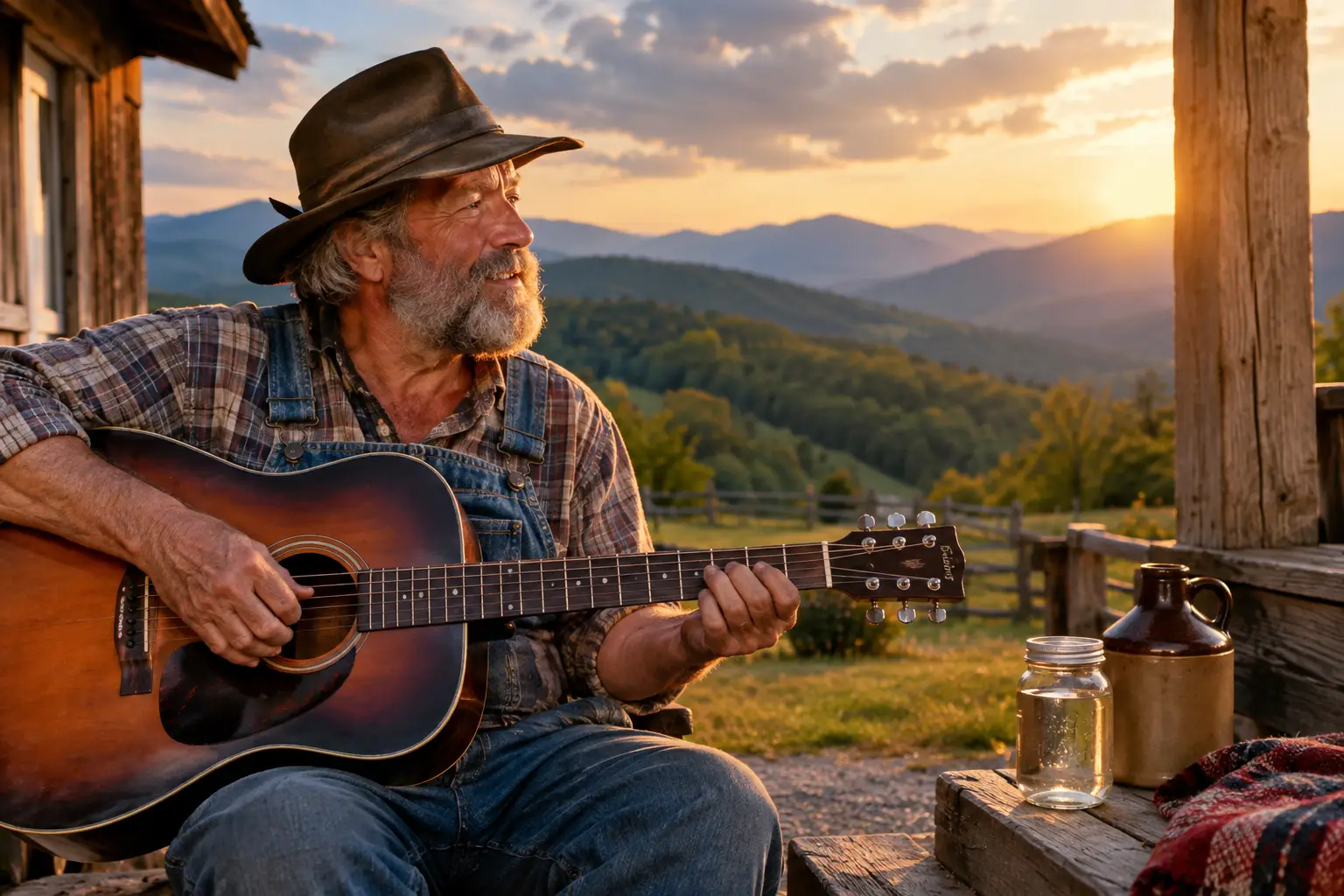
If you want to hear history with a heartbeat, listen to Appalachian music. Old-time string bands, ballads, gospel singing, bluegrass, country, and mountain folk music all carry pieces of the region’s story. The fiddle, banjo, guitar, dulcimer, and mandolin have provided entertainment, comfort, dance music, and a way to preserve memories long before folks had playlists in their pockets.
The banjo alone tells a bigger story than many people realize. Its roots reach back to West African instruments brought to America by enslaved people. In the mountains, Black and white musicians influenced one another, trading tunes, techniques, and rhythms that became part of old-time music. That shared history deserves more credit than it usually gets.
Music was often made at home, at community gatherings, in churches, at dances, and wherever a few folks had time to sit down together. A song could tell of lost love, a local flood, a war, a murder ballad, or a joke that got funnier every time Uncle Ray told it. The point was not polish. The point was feeling.
Bluegrass grew from these traditions but became its own powerful sound in the 20th century. Today, festivals, porch jams, school programs, and young pickers keep the music moving forward. Tradition does not mean playing every tune exactly as your great-grandpa did. It means knowing where the tune came from before you put your own boots in it.
Food Built for Work, Weather, and Company
Appalachian food is honest food. It was shaped by gardens, hunting, preserving, limited cash, seasonal crops, and the need to feed a crowd that had been working since daylight. Cornbread, soup beans, fried potatoes, greens, chow chow, apple butter, ramps, stack cakes, biscuits, gravy, and all manner of cobblers earned their place at the table because they were filling, flavorful, and practical.
Preserving food was not a trendy hobby with matching jars on a social media shelf. Canning, drying, smoking, pickling, and storing root vegetables helped families make it through winter. Plenty of folks still use those skills today, partly out of necessity, partly out of pride, and partly because a home-canned green bean just tastes like somebody cared.
There is no single Appalachian menu, though. Recipes shift by county, family, ancestry, and what grows nearby. One household may swear by white cornmeal while another reaches for yellow. Some folks put sugar in cornbread, and others consider that a matter for serious theological debate. Bless your heart, choose wisely at the family reunion.
Faith, Stories, and Mountain Speech
Churches have long been important gathering places in many Appalachian towns and rural communities. They have offered worship, music, meals, support during hardship, and a place for people to mark life’s biggest moments. Practices vary widely, from quiet services to joyful singing that can rattle the rafters, but the shared thread is often fellowship.
Storytelling belongs right alongside faith and music. Mountain stories can be funny, spooky, tender, exaggerated, and wise all in the same breath. Folks tell stories to remember ancestors, teach a lesson, pass an evening, or gently remind a young’un not to get too big for their britches.
Appalachian speech is part of that heritage too. It has its own vocabulary, rhythms, and turns of phrase, with roots in older English, Scots-Irish speech, African American language traditions, and generations of local creativity. A regional accent is not bad grammar, and it is not evidence that somebody lacks education. It is a voice with a history.
Craftsmanship and Making Do
Quilting, woodworking, blacksmithing, basket making, pottery, weaving, instrument building, gardening, and repair work are more than decorative traditions. They reflect a culture where people used what they had, fixed what could be fixed, and learned skills by watching someone who knew their business.
That spirit also lives in the moonshine heritage people associate with the mountains. Historically, making liquor could be a way for farmers to turn corn into a product that was easier to transport and sell. It also grew into a complicated story tied to taxes, enforcement, family survival, and local independence. Today, legal distilleries can honor parts of that history responsibly, without glamorizing illegal or unsafe activity.
The real lesson is not that every mountain family had a still tucked behind the barn. Good Lord, plenty did not. The lesson is that Appalachian people have always found ways to adapt when the economy did not make life easy.
Keeping a Living Heritage Honest
The best way to respect Appalachian traditions is to support the people carrying them forward. Buy crafts directly from makers when you can. Attend a local music gathering. Learn the story behind a recipe before calling it “rustic.” Listen to elders. Teach young people the songs, skills, and family history that matter.
Just as important, leave room for Appalachia to change. Young mountain folks can love bluegrass and hip-hop, hunt deer and run a business online, honor their grandparents and chase a brand-new dream. There is nothing less Appalachian about progress when it comes with respect for the people and places that raised you.
The mountains have never needed outsiders to make them seem charming. Their strength has always been the people: stubborn in the best way, generous when it counts, and capable of finding laughter even when the road gets steep. If that kind of heritage means something to you, carry it forward the old-fashioned way – show up, lend a hand, tell the truth, and make room at the table.