
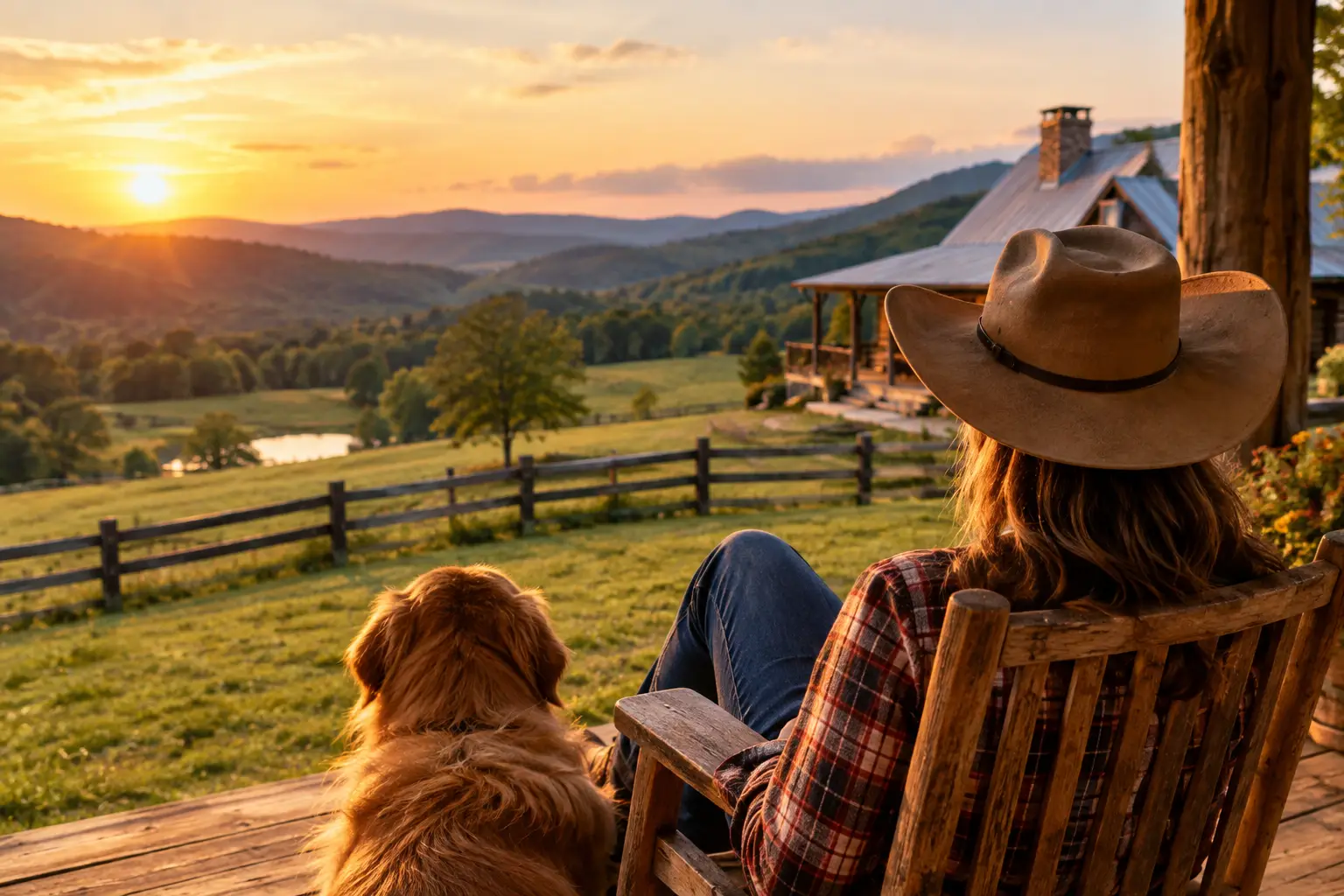
The porch light is on, somebody is grilling supper down the road, and a pickup slows at the mailbox so the driver can wave. That little scene explains why country living never goes out of style better than any slick real estate brochure ever could. Folks may leave the country for a job, college, or a faster pace, but plenty of them spend years trying to find their way back to a place that feels like home.
Country living is not about pretending life is perfect. A busted water line does not care that it is Saturday. Gravel roads get muddy, stores may be a drive away, and everybody seems to know when you finally bought that questionable used truck. But the same life that asks more of you gives something mighty valuable back: room to breathe, people to count on, and a daily reminder that the best things usually take some work.
Why Country Living Never Goes Out of Style
Trends come and go faster than a summer storm. One year, folks are chasing minimalist apartments and fancy gadgets that talk back. The next, they are planting gardens, learning to can green beans, buying old farmhouses, and wondering why a quiet evening outside feels so good. Ain’t that the truth? Country living sticks because it is built around needs that never became old-fashioned in the first place.
People need a sense of belonging. They need useful work. They need places where children can get grass stains on their knees, where an older neighbor’s advice is worth hearing, and where a simple favor is not treated like some grand act of heroism. The country way has always made room for those things.
That does not mean every rural town looks the same or every country family lives by one script. Country America stretches from Appalachian hollers to Midwestern farm roads, Texas ranch country, Great Plains towns, Northwest timber country, and mountain communities clear across the map. The details change. The values behind a good handshake, a hot meal, and showing up when it matters do not.
Space Is More Than Acreage
Ask a country person what they love about home, and sooner or later they will mention space. Sometimes that means acres. Sometimes it means a modest house on the edge of town with a big yard, a woodpile, and enough distance from the neighbors to play music without starting a meeting of the homeowners association.
But real space is not just land. It is mental space. It is being able to step outside after a hard day and hear crickets instead of traffic. It is a sky dark enough to show you more stars than you remembered existed. It is knowing your kids can build a fort, catch lightning bugs, or ride a bike down a quiet lane without every moment being scheduled down to the minute.
For folks who grew up rural and now live in a city or suburb, that feeling can hit hard. One whiff of fresh-cut hay, one country song on the radio, one visit to a family cookout, and suddenly they remember what they have been missing. It is not always about wanting to move tomorrow. Sometimes it is about missing a rhythm of life where there is time to sit a spell and mean it.
The Work Has a Way of Keeping You Honest
Country living has never promised an easy life. Quite the opposite. Fences lean, animals get out, gardens grow weeds whether you have time for them or not, and snow does not care about your morning plans. Good Lord, a country to-do list can reproduce overnight.
Yet there is pride in work you can see. You fix the gate, and it closes. You stack firewood, and it keeps your family warm. You help put up hay, repair an engine, tend a garden, or keep a small business going on Main Street, and the result is right there in front of you. That kind of work teaches patience and responsibility without needing a motivational poster to explain it.
This is one reason country living continues to call to younger generations, too. Plenty of people are tired of spending every waking hour staring at a screen and wondering what they made, built, fixed, or contributed. Rural life offers a chance to get your boots dirty and feel connected to something real. It can be farming, ranching, welding, teaching, running a diner, making music, operating a legal distillery, or simply caring well for a piece of land and the people on it.
Of course, self-reliance does not mean doing everything alone. The country code has always understood that a strong person knows when to lend a hand and when to accept one. Independence and community are not opposites out here. They are partners.
Neighbors Still Mean Something
In many places, a neighbor is just the person whose package you accidentally receive. In country communities, a neighbor is often the first call when trouble shows up. When somebody’s barn needs repair, a family loses a loved one, or a storm tears through town, folks bring tools, food, prayers, and whatever else needs bringing.
Nobody keeps a scoreboard on every casserole, chainsaw, or hour of labor. They help because that is what decent people do. They know someday they may be the ones standing in the driveway wondering how they will get through a rough patch.
That kind of connection is becoming more precious, not less. For all the ways technology can keep people in touch, it cannot replace someone looking you in the eye and saying, “What do you need?” Country communities are not flawless, and small towns can have their share of gossip, growing pains, and disagreements. But at their best, they offer a kind of belonging that no app can manufacture.
Tradition Gives People a Place to Stand
A Saturday fish fry, a fall festival, a county fair, a bluegrass jam, a church supper, a high school ballgame under the lights – these are not just things to put on a calendar. They are the threads that hold communities together.
Tradition matters because it tells people they are part of a story bigger than themselves. Grandpa’s cast-iron skillet, Grandma’s biscuit recipe, a family’s hunting camp, a locally owned hardware store, or a recipe passed around at a reunion all carry memory. They remind us that progress does not require throwing away everything that came before.
The best country traditions are living things, not museum pieces. Young folks bring new ideas to old businesses. Musicians blend fresh sounds with bluegrass roots. Families adapt to changing work, changing weather, and changing times while still teaching their children to respect people, keep their word, and take care of home. That is how heritage stays alive: not by freezing it in place, but by carrying the good parts forward.
It Is Not a Costume or a Weekend Escape
There is nothing wrong with enjoying a cabin weekend, a country concert, or a trip to a small-town festival. Come on out, pull up a chair, and enjoy yourself. But country living is more than boots bought for a photo and a mason jar used as decoration.
It is the everyday stuff. It is checking on an elderly neighbor after a freeze. It is teaching a kid to change a tire. It is supporting the local restaurant even when a chain place is closer. It is waving at folks, picking up the phone instead of hiding behind a comment section, and understanding that your reputation travels faster than you do in a small town.
Not everyone wants livestock, a long commute, or a driveway that needs plowing. Fair enough. Country life has trade-offs, and it is not for every season of every person’s life. But the values people associate with it – honesty, hospitality, grit, loyalty, faith, family, and a willingness to help – travel well wherever you live.
That is the heart of it. Country living never goes out of style because real people never stop needing roots. Whether your home sits at the end of a dirt road, on the edge of a farm town, or miles from the place you were raised, keep a little of that country code with you. Check on your people. Work hard. Make room at the table. And when somebody needs help, be the kind of neighbor they will remember.