
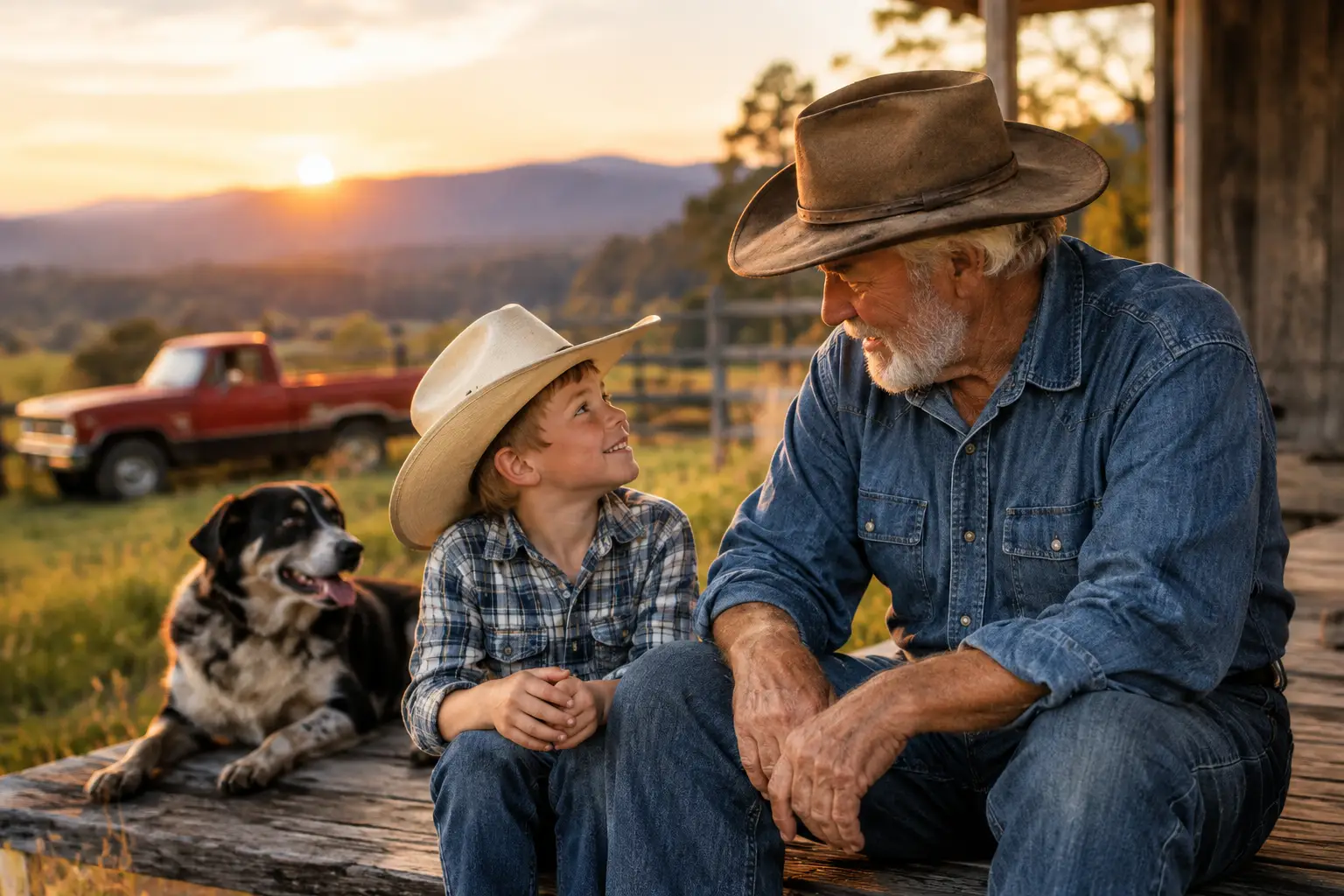
Some folks can say more with “Well, I’ll be” than others can say in a full-blown speech. That is the power of southern sayings. They are not just cute words painted on porch signs or printed on a T-shirt. The good ones carry humor, warning, kindness, common sense, and a whole lot of lived experience.
From Appalachian hollers to Texas ranches, from Carolina front porches to small towns clear up in the Midwest, country people have always had a knack for calling things exactly as they see them. Sometimes softly. Sometimes with a grin. Sometimes in a way that lets you know you had better straighten up without anybody having to raise their voice.
Why Southern Sayings Stick Around
A good saying earns its keep. It gets passed from grandparents to parents, from parents to kids, and from the old fellow at the feed store to anybody wise enough to listen. The words may change a little from one county to the next, but the lesson usually holds steady.
Southern speech is often treated like a joke by folks who have never sat around a kitchen table after a hard day of work. They miss the point. These phrases are verbal tools. They can settle an argument, offer comfort, explain a mess, or call out foolishness with enough grace that nobody has to throw a fit.
They also remind us that country culture is not one-size-fits-all. A saying you heard in eastern Kentucky may sound different in south Georgia or Oklahoma. That is part of the beauty. The accent, rhythm, and local flavor belong to the people saying it.
Southern Sayings With More Than One Meaning
“Bless your heart.”
This may be the most misunderstood phrase in the whole South. Sometimes it means pure sympathy: somebody is sick, grieving, overwhelmed, or trying their best. “Bless her heart, she has had a rough week” is honest kindness.
Other times, the meaning depends entirely on the tone. If Miss Linda says, “Bless his heart, he tried to fix that truck with duct tape and a butter knife,” you are not hearing a compliment. The phrase can soften criticism, but it does not always hide it. Ain’t that the truth?
“If the creek don’t rise.”
You will hear this one after somebody makes a plan: “I’ll see you Saturday, if the creek don’t rise.” It means they intend to be there unless life throws something serious in the road.
The saying comes from a place where weather was not a minor inconvenience. A hard rain could wash out a road, flood a crossing, and turn a short trip into no trip at all. Even now, it carries a healthy reminder that plans are good, but nature and circumstance may have their own ideas.
“You catch more flies with honey than vinegar.”
That is country wisdom for dealing with people. You can holler, threaten, and act like a mule with a hornet under its saddle, but kindness usually gets farther. It does not mean letting folks walk over you. It means knowing when a calm word will do more than a loud one.
In small towns, this matters. You are likely to see the same people at the grocery store, the ball field, church, or the volunteer fire department. Burning every bridge just because you can is poor long-term planning.
“Don’t let the screen door hit you.”
This is not hospitality. It is the polite-country version of telling somebody they are welcome to leave right now. The full version is often a little sharper, but the meaning is clear enough without dressing it up.
The charm is in the delivery. A person can say it with a smile and still make it plain that the conversation, visit, or nonsense has reached its natural end.
“That dog won’t hunt.”
When something is not going to work, the country verdict is simple: that dog won’t hunt. Maybe it is a bad excuse. Maybe it is a business idea with no legs. Maybe your cousin claims he missed supper because he was “helping a stranger move a piano” at 10:30 on a Tuesday night.
Whatever the case, the story does not hold water. And no amount of polishing will make a bad plan useful.
“He’s all hat and no cattle.”
This one is for the big talker who has no work to back it up. He has the boots, the belt buckle, the truck decals, and a story for every occasion, but when it is time to show up, he is suddenly hard to find.
Country people tend to respect results over noise. You do not have to brag about being dependable if you are the one who arrives early, stays late, and keeps your word. Folks notice.
“She’s tougher than a two-dollar steak.”
This is not necessarily an insult. Depending on the situation, it can be high praise for somebody who refuses to quit. It describes the woman who raised a family, worked a job, tended a garden, and still brought food to a neighbor who was down sick.
The phrase has grit to it because grit is what it honors. Country communities have always known plenty of people who are soft-hearted without being soft-spined.
“Finer than frog hair split four ways.”
Now there is a line with some real backwoods craftsmanship. It means something is mighty fine, precise, or impressive. A fresh restoration on an old truck, a clean fiddle break, a plate of biscuits done just right – all of it can qualify.
Nobody says this because it is efficient. They say it because language ought to have a little fun in it. Good Lord, a plain “that’s nice” would not even warm up the engine.
“She’s madder than a wet hen.”
A wet hen is not known for taking things calmly, and neither is the person this phrase describes. It is a colorful way to say someone is seriously aggravated.
Still, there is a difference between being madder than a wet hen and being cruel. The best country sayings can acknowledge a hot temper while reminding us that we ought to cool off before we say something we cannot take back.
“You can put lipstick on a pig, but it’s still a pig.”
Fancy packaging does not fix a bad product, a shaky promise, or a rotten idea. You can repaint the barn, write a flashy slogan, and add chrome to the trailer, but eventually the truth shows itself.
That plainspoken skepticism is worth keeping. It encourages people to look past appearances and judge character, quality, and effort for what they really are.
The Sayings That Teach the Country Code
Some phrases are funny because they are blunt. Others carry the unwritten code that keeps many rural communities strong. “Make do” is not a full saying, but it is a whole philosophy. It means fix what you can, use what you have, and do not confuse waste with success.
“Your word is your bond” is another one that should never go out of style. A handshake may not replace a written contract in every situation, but trust still matters. When somebody says they will help mend a fence, pick up a neighbor from the mechanic, or show up for a family in need, country folks remember whether they followed through.
Then there is “Many hands make light work.” Anybody who has watched a barn raising, a church supper, a benefit ride, or a flood cleanup knows exactly what that means. A community does not become strong by everybody minding only their own business. It gets strong when people see a need and bring what they can.
Say Them Like You Mean Them
There is no need to force southern sayings into every sentence like you are auditioning for a biscuit commercial. If the phrase is not part of your natural speech, it can land flatter than day-old cornbread. The best expressions show up at the right moment – when the fish story gets too tall, when a friend needs encouragement, or when somebody needs a little gentle correction.
And remember, these sayings belong to living people and real places, not a costume. Respect the culture behind the humor. A front porch phrase may sound lighthearted, but it can carry generations of farming, faith, family, hardship, laughter, and neighbors looking out for each other.
That is why these old lines keep hanging around. They tell the truth without making a grand production of it. So the next time life gets complicated, listen close to the plainspoken folks nearby. Chances are, somebody has a saying for it – and chances are, it has been right for a long, long time.