
The old hardware store has a new sign. The diner stays open past supper on Friday night. A young family buys the house that sat empty for three years, and somebody finally gets enough cell service to send an invoice without standing on the porch holding their phone toward the sky. That is what rural revival looks like when it is real.
It ain’t a slick brochure full of barn photos, nor is it a city fellow declaring a town “discovered” because he found a good biscuit. Rural revival is the steady work of making a place livable, lovable, and possible for the folks already there – and for the folks willing to put down roots and pull their share of the load.
For small towns across America, this matters because the fight is not simply about population numbers. It is about whether a kid growing up on a farm, in a mountain hollow, on the plains, or beside a Western county road can imagine a good life close to home without having to leave everything and everybody they love behind.
Rural Revival Is More Than Fresh Paint
A mural on Main Street can be mighty pretty. So can a renovated storefront, a new brewery, a busy fall festival, or a farmers market where folks actually know the growers by name. Those things can bring energy, visitors, and money. They are worth celebrating.
But paint alone will not save a town. Neither will one big annual event, a social-media campaign, or a fancy slogan cooked up by somebody who has never bought feed at the local co-op. A real turnaround reaches deeper. It means stable jobs, decent housing, reliable roads and internet, quality schools, health care within reach, and local businesses that can make it through more than one slow season.
It also means listening to people who have been keeping the lights on all along. The volunteer fire chief, the librarian, the mechanic, the church ladies organizing meal trains, the coach driving the activity bus, the farmer who sponsors the Little League team – they know where the cracks are. Bless your heart, no committee from out of town can replace that kind of knowledge.
The Best Investment Is Local Ownership
Every rural community needs outside dollars from time to time. Grants can fix up a historic theater. Visitors can keep a restaurant humming. A new employer can give families a reason to stay. There is nothing wrong with welcoming help.
Still, a town gets stronger when more of its money, talent, and decision-making stay close to home. That could mean a family opening a tire shop, a veteran starting a welding business, a local distillery telling the legal and proud story of regional spirits, or a young woman selling handmade goods online from the same county where her grandparents raised cattle.
Local ownership does not mean every business has to be old-fashioned. It means the people building the future have some skin in the game. They hire neighbors, sponsor school fundraisers, understand the weather, and know why closing the road during the county fair is a bigger deal than it looks on a spreadsheet.
That is why rural entrepreneurship deserves more than applause after the ribbon cutting. Folks need workable loans, affordable storefronts, training, child care options, and internet that can handle a video call without freezing halfway through a sentence. A hardworking person can build a whole lot with grit, but grit should not have to fight bad infrastructure with both hands tied behind its back.
Broadband Is a Backroad Necessity
Good internet is not a luxury anymore. It is as basic to modern opportunity as a dependable bridge or a paved road. A rancher may use it to track markets and equipment. A student may need it for class. A nurse may use it to connect patients with specialists. A musician, maker, guide, or small-town shop owner can use it to reach customers far beyond the county line.
The catch is that better connectivity should support rural life, not erase it. A town does not need to turn into a copy of someplace else to succeed. The goal is simple: give country people the tools to earn, learn, create, and compete without giving up the land, relationships, and pace of life they value.
Heritage Is an Asset, Not a Costume
America’s small towns have stories that big cities cannot manufacture. Old mill towns, coal communities, fishing villages, ranching country, farming crossroads, railroad depots, tribal traditions, mountain music, local recipes, craftsmanship, and legal moonshine heritage all carry the fingerprints of real people.
Those stories can draw visitors and build pride. But they deserve respect. Heritage should not be treated like a costume somebody puts on for a weekend before hopping back on the interstate. The best cultural tourism lets local people tell their own stories, set the boundaries, and benefit from the dollars that come in.
That might look like a bluegrass gathering that hires local musicians, a county fair that gives young exhibitors their moment, a heritage museum staffed by people with family ties to the place, or a legal distillery that honors regional history without making a cartoon out of it. Folks can have fun, laugh loud, and sell a few T-shirts without sanding off every rough edge of the truth.
Authenticity is not about pretending the past was perfect. Every town has hard chapters. It is about being honest about where a community has been while taking pride in the people who kept showing up anyway.
New Neighbors Can Help, If They Come to Belong
Plenty of Americans are moving toward rural areas for more space, lower costs, quiet, family ties, or simply a yard big enough for a garden and a hound dog. That can be a good thing. New families can fill empty houses, support schools, bring skills, and keep a local business alive.
But rural revival can get sideways when newcomers treat a community like a backdrop instead of a home. If folks want the charm of a small town while complaining about tractors on the road, roosters at dawn, the smell of a working farm, or the volunteer fire siren, they may be shopping for a postcard, not a community.
Belonging takes participation. Go to the school play. Buy from local businesses when you can. Respect private land. Learn why the old courthouse matters. Volunteer at the food pantry or clean-up day. Listen before suggesting everybody change how they have done things for generations.
Longtime residents have a responsibility, too. A closed circle eventually becomes a shrinking one. Offering a welcome, sharing local know-how, and making room at the table does not betray tradition. It is tradition. Country hospitality has never meant handing somebody a rulebook at the door. It means saying, “Come on in, grab a plate, and lend a hand when the work starts.”
Keep Young People in the Picture
A rural town cannot call itself revived if its young people see no future there. Not every teenager will stay, and they should not be pressured to. Some will leave for college, military service, travel, or careers that fit them better elsewhere. That is part of life.
The problem comes when leaving feels like the only respectable path to opportunity. Schools, businesses, and community leaders can change that by showing young people the many kinds of success that exist close to home. A skilled tradesperson, teacher, nurse, farmer, mechanic, artist, entrepreneur, conservation worker, and local business owner all help make a community run.
Mentorship matters here. A teenager who gets to shadow a contractor, help at a veterinary clinic, learn welding, perform at a local venue, or sell produce at a market sees something powerful: country life is not a dead end. It is a place where useful skills still matter and a person can be known for the quality of their work.
The Work Is Ordinary, and That Is the Point
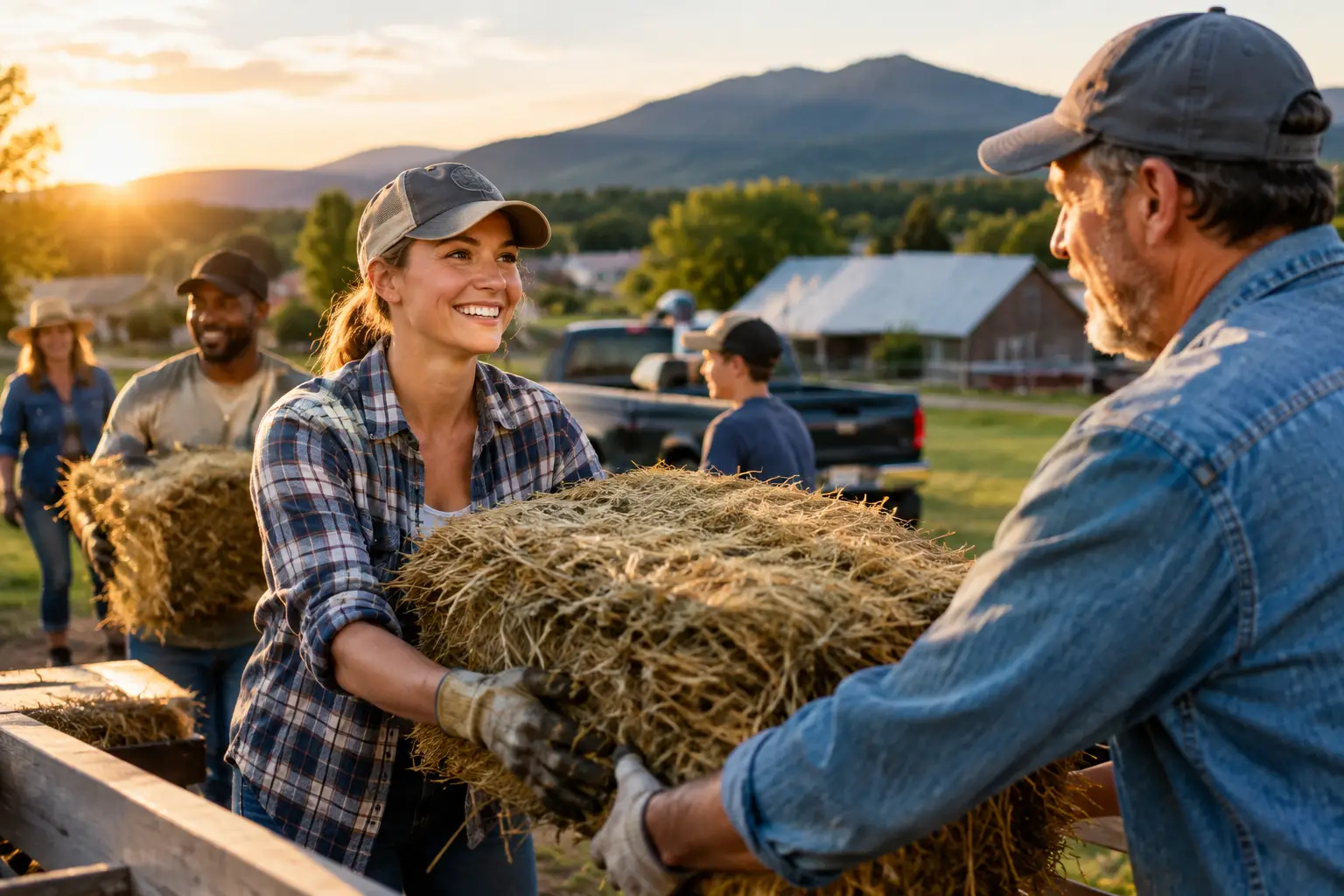
There is no magic switch for rural revival. Good Lord, if there were, every town council in America would have flipped it before breakfast. Progress is usually less glamorous than folks want it to be. It is a repaired water line, a business mentor, a cleaned-up ballfield, a reliable ambulance service, a fair permit process, a restored building, and neighbors choosing not to let a good idea die alone.
Backwoods America believes small towns are full of people who know how to build, fix, feed, teach, serve, and show up. The country way has never been about waiting around for somebody else to rescue the community. It is about taking pride in your place, helping the next fellow, and keeping your word when the work gets hard.
If you want to help your town grow stronger, start close. Spend a few dollars locally. Thank the volunteers. Take a young person seriously. Attend the meeting. Support the business with a fighting chance. Tell the true story of where you are from.
A rural revival does not arrive with a marching band. Most times, it starts with a neighbor saying, “What needs doing?” Then another neighbor answers, “I’ll be there.”