
Some folks hear “Appalachian” and picture a porch, a banjo, and a jar with no label on it. Well, a porch and a banjo might be involved, and nobody at Backwoods America is fixing to disrespect a good jar. But Appalachian culture is a whole lot bigger than the stock characters folks have been selling on television for years. It is family stories, hard labor, faith, humor, music that can raise the hair on your arms, and neighbors who show up before you have time to ask.
The Appalachian region stretches across a wide swath of America, from parts of southern New York down through Alabama and Mississippi. That is a mighty big patch of ground, which means there is no single Appalachian accent, recipe, political belief, job, or way of life. Folks in eastern Kentucky, western North Carolina, southwest Virginia, West Virginia, north Georgia, and Pennsylvania may share mountain roots while having their own local traditions and strong opinions about how things ought to be done. Ain’t that the truth in just about every small town?
Appalachian Culture Was Built by Real Work
The mountains have always asked something of the people living in them. Steep land, winding roads, rough weather, and distance from city centers encouraged a practical kind of self-reliance. People learned to grow food where they could, repair what broke, hunt and fish when needed, and make a dollar stretch farther than polite company might believe possible.
That history includes farming, timber, railroads, mining, manufacturing, military service, and countless small trades. It also includes sacrifice. Too many outside stories reduce Appalachia to either a postcard paradise or a tale of hardship. Both miss the people standing in the middle of the picture. A mountain community can carry economic challenges and still be full of talent, pride, generosity, ambition, and downright funny folks who refuse to let a hard season have the last word.
Work in Appalachia has often been tied to place. A family may know the same creek, ridge, churchyard, and old homeplace across generations. That connection can make leaving difficult, but it can also create a loyalty that is hard for outsiders to understand. Home is not merely an address. It is the spot where your granddaddy taught you to bait a hook, where somebody remembers your mama, and where a casserole arrives at the door when life turns upside down.
The Sound of Appalachian Culture
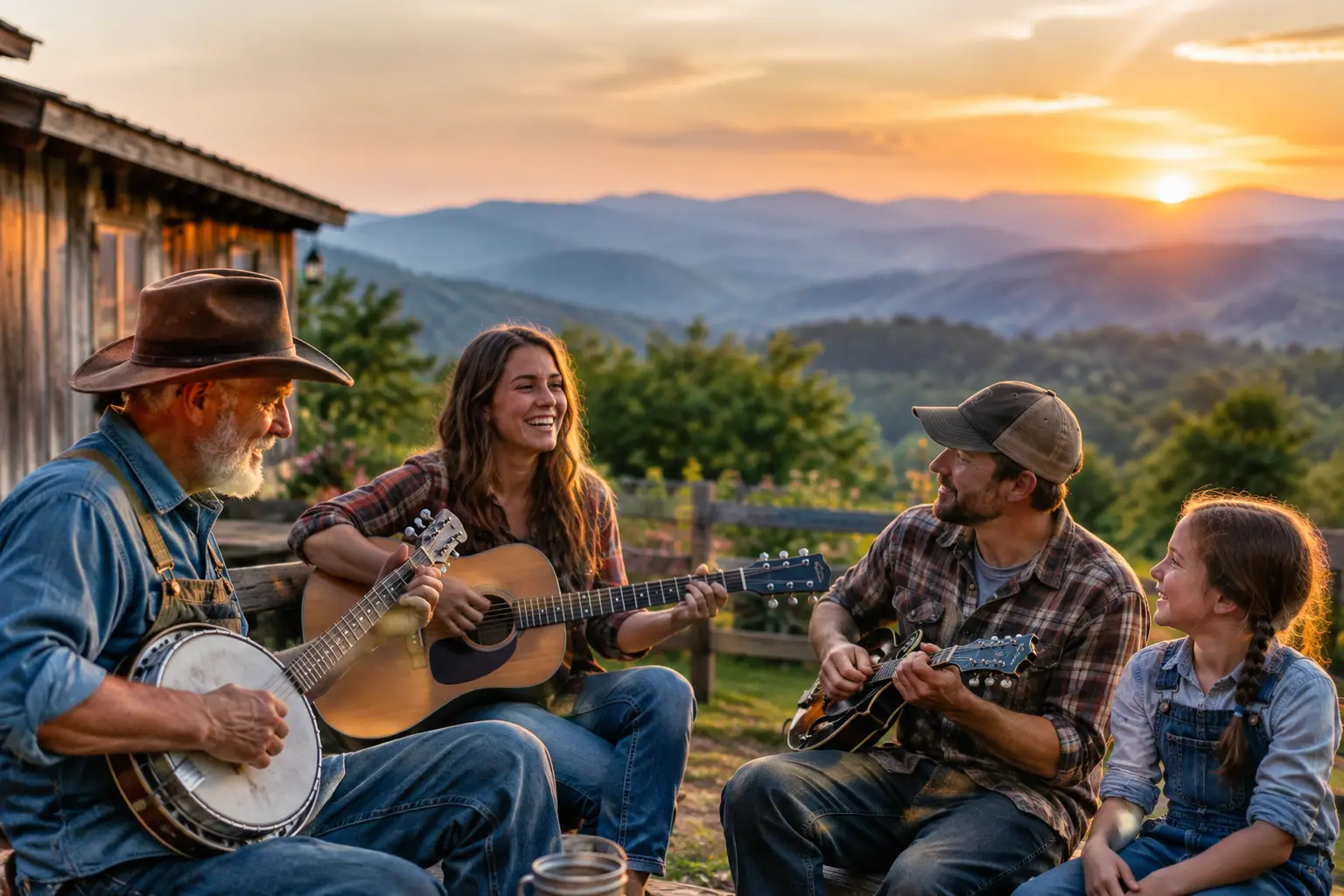
If you want to understand the mountains, listen close. Old-time music, ballads, bluegrass, gospel, country, and folk traditions all carry pieces of Appalachian history. Fiddle tunes and banjo rolls traveled across generations by ear, at kitchen tables, front porches, church gatherings, dances, and community events. The music was not always polished for a stage. A lot of it was made because people had something to say and a need to say it together.
The banjo itself tells a fuller American story than many people realize. Its roots reach back to West African instruments, and its sound became deeply woven into mountain music through generations of musicians and cultural exchange. That matters because Appalachia has never been one-note. Native peoples, Black communities, Scots-Irish and English settlers, German families, immigrants, and people from many other backgrounds all helped shape the region.
Music is also proof that joy does not require much fancy equipment. Give good musicians a fiddle, guitar, mandolin, banjo, bass, or just a pair of hands keeping time, and a plain room can turn into the liveliest place in the county. A sad song may be followed by laughter. A gospel chorus may rise after a long workweek. That mixture of pain, faith, mischief, and resilience is mountain music at its finest.
Storytelling Is a Mountain Skill
Appalachian storytelling deserves its own seat at the table. A good storyteller can make a simple trip to the feed store sound like an epic journey involving bad weather, a stubborn mule, and a cousin who should not have been trusted with the truck keys.
But the tradition runs deeper than tall tales. Oral history has kept family memories, local legends, remedies, songs, and lessons alive. Stories pass along a sense of humor, but they also teach people who they are. They remind young folks that their people were not just names on grave markers. They were hunters, midwives, preachers, mechanics, schoolteachers, musicians, caregivers, and characters of the first order.
Craft, Food, and the Know-How to Make Do
Mountain craftsmanship comes from necessity, patience, and pride in doing something right. Quilting, woodworking, blacksmithing, basket making, pottery, instrument building, canning, and sewing all reflect skills that have helped households endure and communities earn a living. Not every handmade item is meant to sit behind glass like it is too precious to touch. A quilt ought to keep somebody warm. A chair ought to hold up under company. A well-made tool ought to work.
Food tells the same kind of story. Beans and cornbread, soup beans, biscuits, ramps, greens, apple butter, fried pies, chow chow, stack cakes, and whatever came out of the garden have fed families for generations. Recipes vary from holler to holler, and that is part of the fun. Start an argument over the proper way to make cornbread if you want, but be prepared to eat your words along with supper.
Then there is the region’s moonshine heritage. It has been romanticized, mocked, and misunderstood in equal measure. Historically, making spirits was tied to agriculture, economics, tradition, and, at times, resistance to taxes folks saw as unfair. That history is worth discussing honestly without pretending illegal liquor was harmless or turning it into a how-to lesson. Today, legal distilleries and heritage makers can preserve old flavors and stories while doing business aboveboard. That is a better road for honoring the past and supporting local jobs.
Community Is Not Just a Catchphrase
The strongest part of Appalachian life may be the unwritten code people practice when nobody is handing out medals. You check on an elderly neighbor. You bring food when someone is grieving. You lend a hand when a roof needs patching, a fence is down, or a family has had a run of bad luck. You may fuss with your kin, but you stand with them when it counts.
That spirit does not mean every community is perfect. Small towns have disagreements, old grudges, and folks who would debate a fence line until next Tuesday. But the best of Appalachian culture makes room for accountability right alongside compassion. Keeping your word matters. Showing respect matters. Helping somebody who cannot repay you matters most of all.
Young people are a major part of this story, too. Preserving heritage does not mean demanding that every teenager live exactly like it is 1952. Plenty of Appalachian young folks are learning trades, starting businesses, making music, going to college, serving their communities, and finding ways to stay connected even when work takes them elsewhere. Culture stays alive when it is carried forward, not sealed up in a museum jar.
Stop Treating the Mountains Like a Punchline
The “hillbilly” label has been used with pride by some mountain folks and used cruelly by others. Context matters. When people claim the word for themselves with humor and grit, it can signal belonging. When outsiders use it to suggest ignorance, laziness, or backwardness, it is just lazy writing wearing muddy boots it never earned.
Appalachian people do not need anybody’s pity, and they do not need to be polished into some fake country commercial either. What they deserve is the same thing every American community deserves: to be seen clearly. That means recognizing the hardship without making hardship the whole identity. It means celebrating tradition without pretending the past had no problems. It means listening to people tell their own stories.
So if you get the chance, spend time in the mountains with your ears open. Visit a local music gathering, buy from a craft maker, eat at the family restaurant with the hand-painted sign, or sit a spell and let somebody tell you about the old days. You may come for the scenery, but you will remember the people. And if somebody offers you a plate before asking your name, well, pull up a chair. You have just met one of the finest parts of Appalachian culture.