
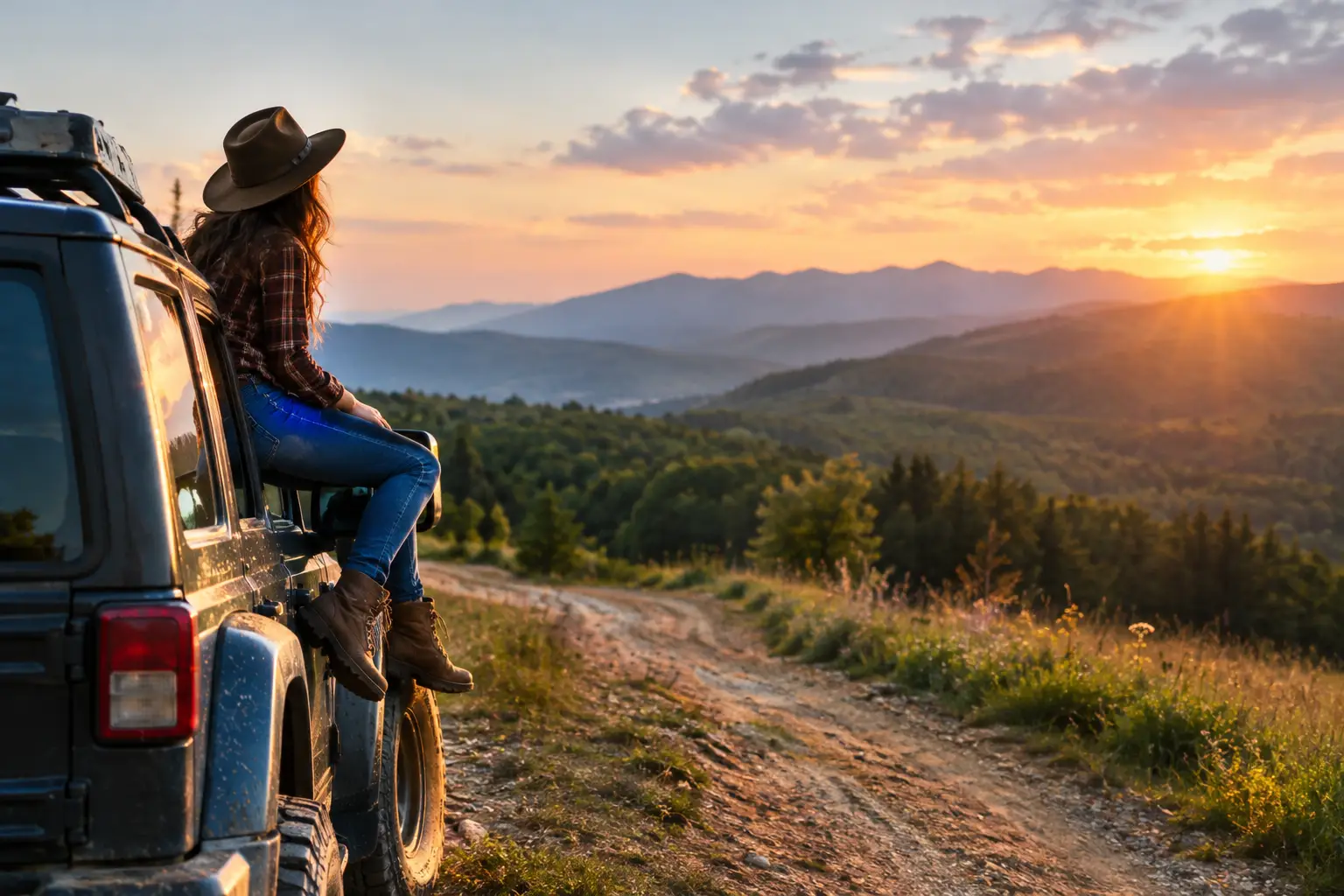
The best backroad adventures usually begin after the cell signal gets weak, the highway noise fades out, and somebody in the passenger seat says, “I wonder where that road goes.” That is the moment right there. Not a polished itinerary. Not a packed parking lot with a souvenir shop. Just an old county road, a full tank, and enough sense to know that the world gets mighty interesting past the last four-lane.
For folks raised in small towns, a backroad can be a shortcut to Grandma’s house, a fishing hole, a hard day’s work, or the place you learned to drive with one hand gripping the wheel and the other trying to keep a sweet tea from spilling. For folks looking to reconnect with country roots, those same roads can offer something harder to find than a scenic overlook: a real look at how rural America lives.
Why Backroad Adventures Still Matter
Backroads are not theme parks for people who want a quick photo and a fake rustic sign. They are working places. They run past hay fields, feed stores, family farms, repair shops, church suppers, timber land, volunteer fire departments, little league diamonds, and front porches where folks have seen more than most people could fit in a memoir.
That is what makes them worth traveling. A backroad adventure slows you down enough to notice the details that the interstate skips. You see the hand-painted sign for a Friday night fish fry. You spot an old barn holding on through another winter. You find a diner where the waitress knows everybody by name and still treats a stranger like they ought to have been there all along.
There is no shame in wanting to get off the pavement and see something real. Plenty of people have traded a rural zip code for a city job, but the pull of home never quite leaves. Others were not raised country at all but know, deep down, they would rather hear cicadas than traffic for a while. Ain’t that the truth?
A Good Backroad Adventure Starts With Respect
The freedom of the open road does not mean every gate is an invitation. Rural America runs on a simple code: respect people, respect property, and do not leave a mess for somebody else to deal with. That code will carry you farther than any fancy travel app ever will.
Stay on public roads unless you have clear permission to go farther. A gravel lane may look like it leads to a hidden waterfall, but it may also lead straight through somebody’s farm, hunting lease, or driveway. Do not block gates, turn around in a stranger’s yard if you can help it, or treat livestock like background decorations for a social media post. Cows may look calm, but a bull with an attitude can teach a city fellow some fast lessons. Good Lord.
Keep your speed down, especially on narrow roads. Dust settles on houses, gravel gets thrown, kids ride bikes, dogs wander, tractors pull out slow, and folks on horseback have enough to worry about already. If a local is behind you and knows the road better, find a safe place to let them pass. That is not surrender. That is common sense wearing boots.
And pack out what you bring in. A backroad is not a trash can just because nobody is standing there with a ticket book. If you come across litter and have room to pick up a little of it, that is country character in action. Leave it better than you found it.
Let Curiosity Do the Driving
The secret to finding a good route is not chasing every supposedly “hidden” place online. Once a spot gets tagged by ten thousand people, it usually quits being hidden and starts needing a parking attendant. Instead, look for the signs of living culture.
Follow the roads that connect small towns rather than simply racing through them. Pull into the town square. Read the historical marker. Check out the mural on the side of the hardware store. Stop at a local café where the menu is taped to the wall and breakfast is still served like it means something. Ask respectful questions, listen more than you talk, and understand that not every resident is waiting around to entertain visitors.
Some of the best discoveries are plain as day: a roadside produce stand with tomatoes that actually taste like tomatoes, a community festival banner stretched across Main Street, an old-fashioned barbershop, a local music jam, or a legal craft distillery carrying forward a regional tradition with pride. These places do more than sell a product or serve a meal. They keep local stories, skills, and jobs alive.
If you find a small business worth remembering, spend a few dollars there if you can. Buy the pie. Tip the server. Take home a jar of local honey or a T-shirt from the town festival. Supporting a community beats treating it like a movie set every single time.
What to Keep in the Truck
A fancy off-road rig is fine if you have one, but it is not required. Plenty of memorable roads can be traveled in a dependable car, pickup, motorcycle, or SUV. What matters is knowing your vehicle, checking the weather, and not confusing confidence with good judgment.
For a proper day out, keep a paper map in the glove box, along with drinking water, a basic first-aid kit, a flashlight, a phone charger, a spare tire in usable condition, and a little cash. Many rural businesses are fully set up for cards, but it never hurts to have folding money when the internet is acting possessed or a roadside stand runs on an honor box.
Tell somebody where you are headed if your route will take you through remote country. Download maps before service disappears. Watch the fuel gauge, because a “gas station up ahead” can mean 30 miles of curves and two closed pumps. If heavy rain is in the forecast, do not gamble on low-water crossings or muddy roads you do not know. A photograph is not worth getting stuck axle-deep with no signal and a thunderstorm rolling in.
The trade-off is simple. Spontaneity makes the day memorable, but a little preparation keeps it from becoming the kind of story your buddies laugh about for the next ten years.
The Best Stops Are Often the Unplanned Ones
You may set out hoping to find a covered bridge, a mountain overlook, or a quiet creek. Then the real highlight turns out to be an 82-year-old man outside a garage explaining how he restored a 1950s pickup, or a kid selling boiled peanuts with more hustle than half the business world.
Those moments cannot be scheduled, and they should not be forced. If somebody is busy, let them be busy. If a conversation naturally opens up, give it your attention. Rural people are often generous with their knowledge, but nobody owes a traveler their time just because they pulled up with a camera.
Take pictures with care. Photograph landscapes, old signs, and your own crew all day long. Before taking close photos of people, homes, or businesses, ask. Most folks appreciate the courtesy. Some may even point you toward the next place worth seeing.
Backroad adventures also work best when you quit trying to prove you had one. Put the phone down for a stretch. Roll the windows down. Let the kids throw rocks in the creek, if it is safe and permitted. Hear the tires crunch over gravel. Watch the sun drop behind a field. There is a whole lot of life that does not need a caption.
Bring Home More Than a Story
The finest roads in America do not always end at famous landmarks. Sometimes they end at a little town you had never heard of, where the folks at the diner fed you well and the cashier told you to drive safe like they meant it. Sometimes they lead back to your own hometown with fresh eyes.
That is the real gift of backroad adventures. They remind us that this country is still held together by ordinary people doing necessary work, keeping traditions alive, raising families, opening shop before daylight, and lending a hand when the need arises. Backwoods America was built on that kind of spirit – small towns, big hearts, real people.
So fill the tank, mind your manners, and take the road that does not promise much. It may hand you a better day than anything you had planned.