
Ask ten folks at a county fair, a deer camp, or a family cookout about the difference between a redneck and a hillbilly, and you may get twelve answers before the sweet tea gets warm. Some people use the words like they mean the same thing. Others will correct you quicker than a grandpa spotting a fence post leaning sideways. Truth is, both labels carry history, humor, baggage, and plenty of hometown pride.
Neither word can neatly explain a whole kind of person. A fellow can live in the mountains, drive a lifted truck, know every bluegrass standard ever recorded, and still not call himself either one. Another may wear redneck or hillbilly like a badge on his ball cap. The real difference usually comes down to roots, region, and the story a person means when they use the word.
The Short Answer
A hillbilly traditionally refers to someone from the rural mountain country of Appalachia and the upland South. Think of communities shaped by steep hollers, coal camps, timber work, old-time music, tight family ties, and a stubborn kind of self-reliance.
A redneck traditionally refers more broadly to working-class rural people, especially those whose outdoor labor left the backs of their necks sunburned. The term has strong Southern associations, but it has traveled far beyond the South. You can find proud rednecks on a farm in Iowa, at a rodeo in Oklahoma, in a machine shop in Michigan, or fixing a fence in Montana.
That is the plainspoken version. But Good Lord, language is rarely that simple.
Difference Between a Redneck and a Hillbilly: Roots Matter
The biggest difference between a redneck and a hillbilly is that hillbilly is more connected to a particular place and cultural heritage, while redneck is more connected to class, work, attitude, and rural identity.
Hillbilly has mountain roots
Historically, hillbilly was often used by outsiders to describe rural people in Appalachia – a wide region that reaches from parts of southern New York down through Pennsylvania, Ohio, West Virginia, Virginia, Kentucky, Tennessee, North Carolina, Georgia, Alabama, and beyond. It can also apply more loosely to people from other mountain regions with similar traditions.
For many Appalachian families, life in the hills demanded practical skill. Folks learned to hunt, garden, preserve food, repair what broke, make music on the porch, and look after neighbors when the weather turned rough or money got thin. Those are not cartoon traits. They are real survival skills and cultural values passed down through generations.
The word hillbilly has not always been kind. For decades, movies and television treated mountain people as ignorant, lazy, violent, or backward. That mess did real damage, because it ignored the intelligence, craftsmanship, faith, humor, and hard work found in Appalachian communities. These days, many people have reclaimed hillbilly with pride, especially when it means honoring mountain roots without accepting the ugly stereotype.
Redneck grew from work and the land
Redneck began as a description for poor white farmers and laborers who worked outside long enough to get sunburned necks. It was not originally a fancy word, and it was often thrown around as an insult by people who looked down on rural working folks.
The term also has a history connected to labor solidarity. In the early twentieth century, mine workers in parts of Appalachia and West Virginia wore red bandanas during labor struggles, adding another layer to the name. That history matters because it reminds us that redneck has never simply meant a loud truck and a cooler full of cold drinks. It has also meant working people standing shoulder to shoulder when they believed they were getting a raw deal.
Today, redneck is used across the country in several ways. Sometimes it means a person who is country-proud, mechanically handy, outdoorsy, blunt, and allergic to putting on airs. Sometimes it is used as a joke among friends. Sometimes it is still meant as an insult. Context decides a whole lot.
Culture Is Bigger Than the Costume
Here is where folks get tangled up: a redneck and a hillbilly can look alike from the outside. Both might fish on Saturday morning, cook on a grill that has seen better days, listen to country or bluegrass, know how to back a trailer, and have an opinion about the best way to fry catfish.
But none of that makes a person one or the other.
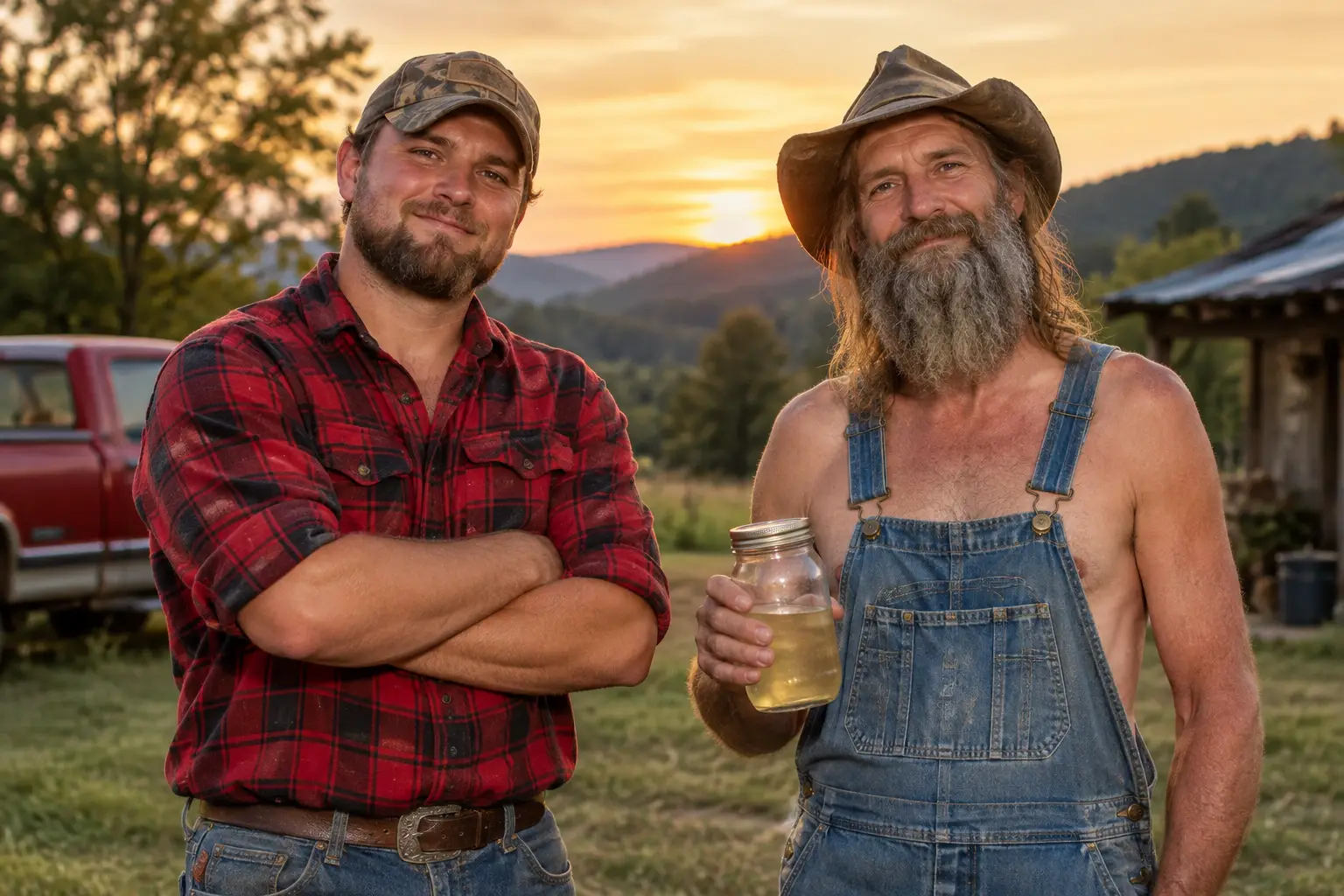
A hillbilly identity often centers on family heritage and mountain culture. It may bring to mind Appalachian fiddle tunes, banjo music, front-porch storytelling, herbal know-how, coal and timber history, church suppers, and recipes that have survived because somebody’s grandma refused to write them down. Moonshine heritage belongs in that history too, though it deserves more respect than a cheap punchline. The story includes mountain ingenuity, complicated laws, family lore, and, today, legal distilleries carrying traditional flavors into a new era.
Redneck identity often leans into rural working-class pride. It can include farming, construction, trucking, welding, ranching, hunting, motorsports, mud bogs, classic pickups, and the belief that if something breaks, you ought to at least try fixing it before paying somebody else. That identity can be Southern, Midwestern, Western, or plain old backwoods American.
There is plenty of overlap, of course. A mountain mechanic may proudly call himself both. A ranch hand in Wyoming may call herself redneck but have no connection to Appalachia at all. It depends on where folks come from, what they have lived, and what the words mean in their own community.
What These Words Should Not Mean
Neither redneck nor hillbilly should be used as shorthand for being dumb, cruel, racist, poor, or incapable. Those are lazy stereotypes, and they miss the point by a country mile.
Rural America has always had complicated people, just like every other part of America. It has teachers and veterans, nurses and welders, farmers and artists, entrepreneurs and musicians, folks with college degrees, folks who learned their trade with their hands, and plenty who are both book-smart and dirt-road wise.
Being proud of country life does not require pretending every old custom was perfect. It means knowing there is honor in hard work, wisdom in experience, and strength in a community that shows up with food, tools, and prayers when a neighbor needs help. Ain’t that the truth.
When Is It Okay to Use the Terms?
If someone calls themselves a redneck or hillbilly, take their lead. A little good-natured humor can be part of the fun when it comes from shared respect. But if you are talking about a whole region or a community you do not know well, be careful with labels.
Say Appalachian people when you mean people from Appalachia. Say rural workers, farmers, mountain communities, or country folks when those descriptions fit better. Specific words usually tell a truer story than a broad nickname ever can.
And if you hear someone use either term to sneer at hardworking people, do not let it slide by as harmless fun. There is nothing inferior about raising kids where the roads are gravel, growing your own food, knowing your neighbors, or choosing a life closer to the land.
Pride Has More Than One Accent
At Backwoods America, we know country pride does not come in one brand of boots. It may sound like a banjo rolling through a mountain hollow. It may sound like a diesel engine starting before sunrise. It may look like a family tending a farm, a crew rebuilding after a storm, or a small-town volunteer staying late to get the job done.
So, call yourself what feels honest to your story. Just remember that redneck and hillbilly are not costumes for somebody else’s joke. At their best, they speak to resilience, humor, independence, heritage, and a willingness to help when the chips are down. That kind of character will always mean more than any label.