
Some folks are remembered for the fortunes they made, others for the laws they broke. But sometimes, the most powerful stories belong to ordinary people who were simply trying to survive.
Back in 1923, during the rough and uncertain days of American Prohibition, a Polish immigrant named Mary Wazeniak found herself caught in a struggle that would forever change her life. She wasn’t a wealthy gangster, a powerful bootlegger, or somebody chasing fame and fortune. She was a 34-year-old mother of three, living near Chicago, trying to keep her family together during some mighty difficult times. Her husband was seriously ill, money was scarce, and providing for her children was a daily concern. Like so many hardworking families of that generation, Mary faced the kind of hardships that don’t leave a person with many easy choices.
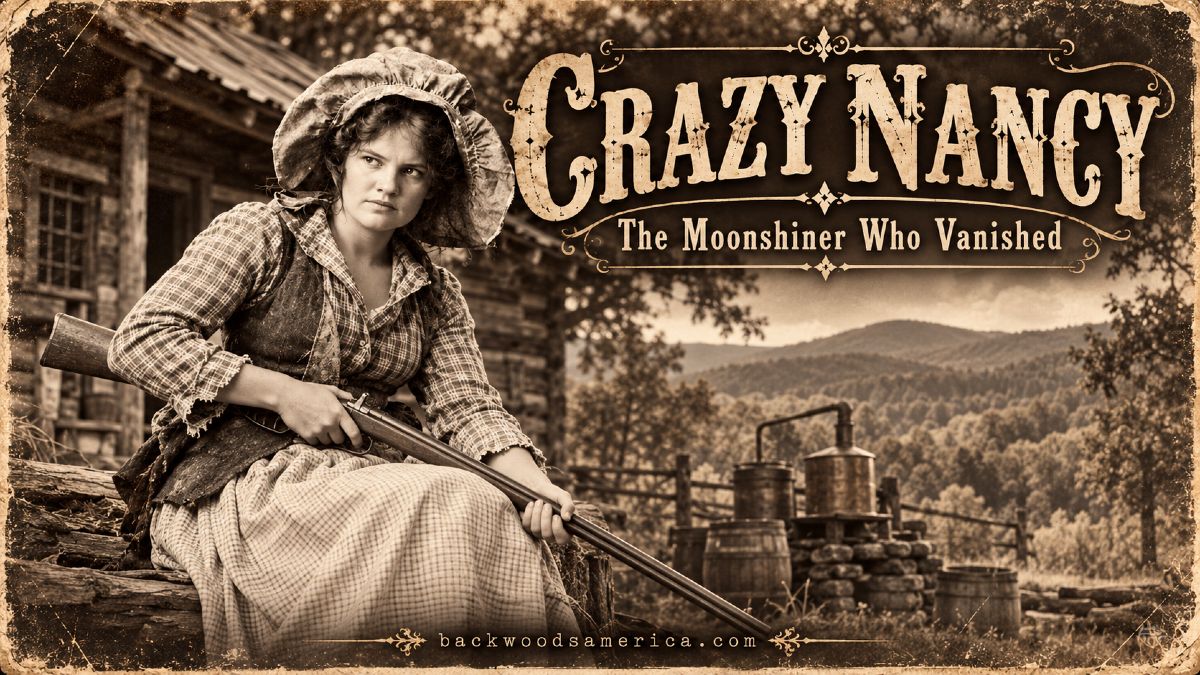
There was a time in America when survival meant making do with whatever you had. Folks raised gardens, patched worn-out clothes, traded with neighbors, and found ways to stretch a dollar until it nearly snapped. And when times got especially desperate, some people turned to opportunities that existed outside the law. During Prohibition, one of those opportunities was the underground liquor trade. For Mary, that meant operating a little speakeasy out of her home, where customers could purchase moonshine despite the nationwide ban on alcohol.
According to accounts of her trial, Mary explained that she had been selling liquor to help support her sick husband and three children. She wasn’t running some enormous operation with fancy automobiles and suitcases full of cash. She was a working-class woman trying to provide for the people depending on her. There’s something about that kind of struggle that folks raised in the mountains, on farms, and along America’s backroads can understand. When life backs you into a corner, sometimes the hardest decisions come when you’re simply trying to make it through another day.
But Mary’s story would take a heartbreaking turn in November 1923. A customer named George Rheutan reportedly purchased moonshine from her establishment and later died after consuming liquor contaminated with methanol, commonly known as wood alcohol. It was a tragic example of the dangers associated with the illegal liquor trade during Prohibition, when poorly made or deliberately adulterated alcohol could cause blindness, serious illness, and death. George’s life was lost, and his death left consequences that could never be undone. Mary was arrested, prosecuted, and convicted of manslaughter, eventually receiving a prison sentence of one year to life.
It was then that newspapers began calling her “Moonshine Mary,” a nickname that would outlive nearly everything else known about her.
Now, it’s easy to look back more than a hundred years and judge people by the decisions they made. But understanding history requires more than reading an old headline and deciding who was right or wrong. Mary’s circumstances deserve compassion, just as the man who lost his life deserves to be remembered. Her financial struggles cannot erase the consequences of selling dangerous liquor, but those consequences don’t erase the difficult circumstances surrounding her life, either. History is rarely as simple as we’d like it to be, and sometimes the truth lies in understanding several painful realities at once.
What makes Mary’s story especially haunting is how little we know about what happened to her afterward. Historical accounts preserve the tragic events, the courtroom proceedings, and the prison sentence, but reliable details about the rest of her life are difficult to find. Did she eventually return home to her children? Did her family manage to survive the hardships that followed? Did she ever find peace after everything that happened? Those are questions history has largely left unanswered.
And that, right there, is something worth thinking about.
How many ordinary Americans lived through unimaginable hardships, only to disappear from the history books? How many mothers worked themselves to exhaustion, how many fathers broke their backs trying to provide, and how many families struggled through circumstances that future generations would never fully understand? We remember the famous outlaws, the wealthy industrialists, and the larger-than-life characters who shaped America’s past. But sometimes we forget the everyday people whose lives were just as real, whose struggles were just as painful, and whose stories deserve to be told.
Here at Backwoods America, we believe there’s something deeply important about remembering those people. Our country’s history wasn’t built entirely by famous men with their names carved into monuments. It was built by farmers, coal miners, railroad workers, immigrants, mountain families, and hardworking folks who got out of bed every morning and did their best with what life handed them. Some succeeded, some failed, and some made decisions they would spend the rest of their lives regretting. But every one of them was part of the complicated story of America.
Mary Wazeniak’s life reminds us that our ancestors weren’t always saints, and they weren’t all outlaws, either. They were human beings with hopes, fears, responsibilities, weaknesses, and dreams for a better tomorrow. Some of them left behind great accomplishments, while others left behind warnings about the consequences of difficult choices. There’s wisdom to be found in both. We can honor the struggles of those who came before us without celebrating every decision they made, and we can learn from their mistakes without forgetting their humanity.
That’s something country folks have understood for generations. Life ain’t always fair, hard work doesn’t always guarantee a happy ending, and sometimes the toughest people carry burdens nobody else can see. The lessons handed down around Grandma’s kitchen table, on a weathered front porch, or beside a woodstove on a cold winter night often come from people who learned the hard way. Their stories teach us about responsibility, perseverance, compassion, and the importance of remembering where we came from.
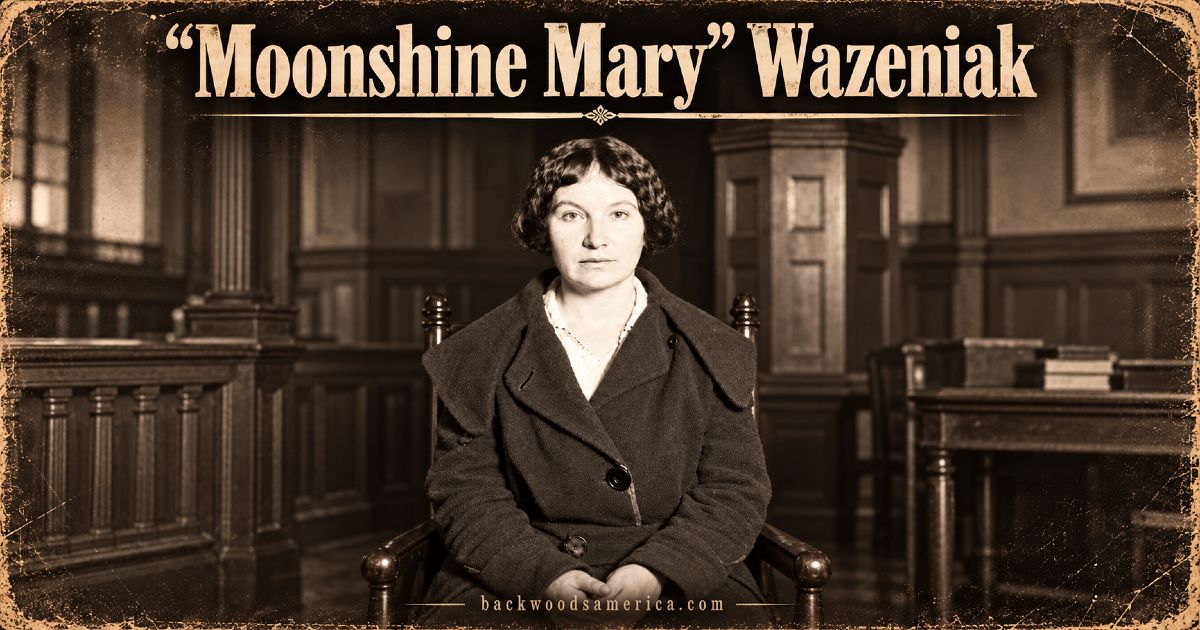
When we look at the old photograph associated with Moonshine Mary today, we’re reminded that behind every historic face is a real human story. Before the newspapers gave her a nickname, she was Mary Wazeniak, a mother trying to provide for her family. Her story became entangled with tragedy, the law, and one of the most turbulent chapters in American history. And although much of her later life remains unknown, the lessons surrounding her experiences are still worth discussing more than a century later.
We should remember the man whose life was lost, the family whose future was changed, and the difficult realities that surrounded them. Their story is not one to romanticize, but neither is it one that should simply disappear.
Because history isn’t just about celebrating the good old days. It’s about understanding the people, the hardships, the triumphs, and the tragedies that helped shape the country we call home.
At Backwoods America, we’re proud to preserve the stories of ordinary Americans, whether those stories are filled with laughter, courage, heartache, or hard-earned lessons. We believe our roots matter, our history matters, and the people who came before us deserve to be remembered with honesty and respect.
Moonshine Mary Wazeniak may have lived more than a century ago, but her story leaves us with something that still rings true today: every life has a story, every choice has consequences, and every generation has something to teach the next.
The past ain’t always pretty, and the people weren’t always perfect. But their stories still matter.
And as long as we’re here at Backwoods America, we’ll keep doing our part to make sure those stories aren’t forgotten.
Keeping America’s Stories Alive
Have you ever heard your grandparents or great-grandparents tell stories about Prohibition, moonshining, the Great Depression, or surviving hard times? Maybe your family has an old photograph tucked away in a drawer or a story that’s been passed down for generations.
We’d love to hear it. Because the memories we preserve today become the history our grandchildren will remember tomorrow.
Backwoods America — Preserving the People, Traditions, and Stories That Made America.