

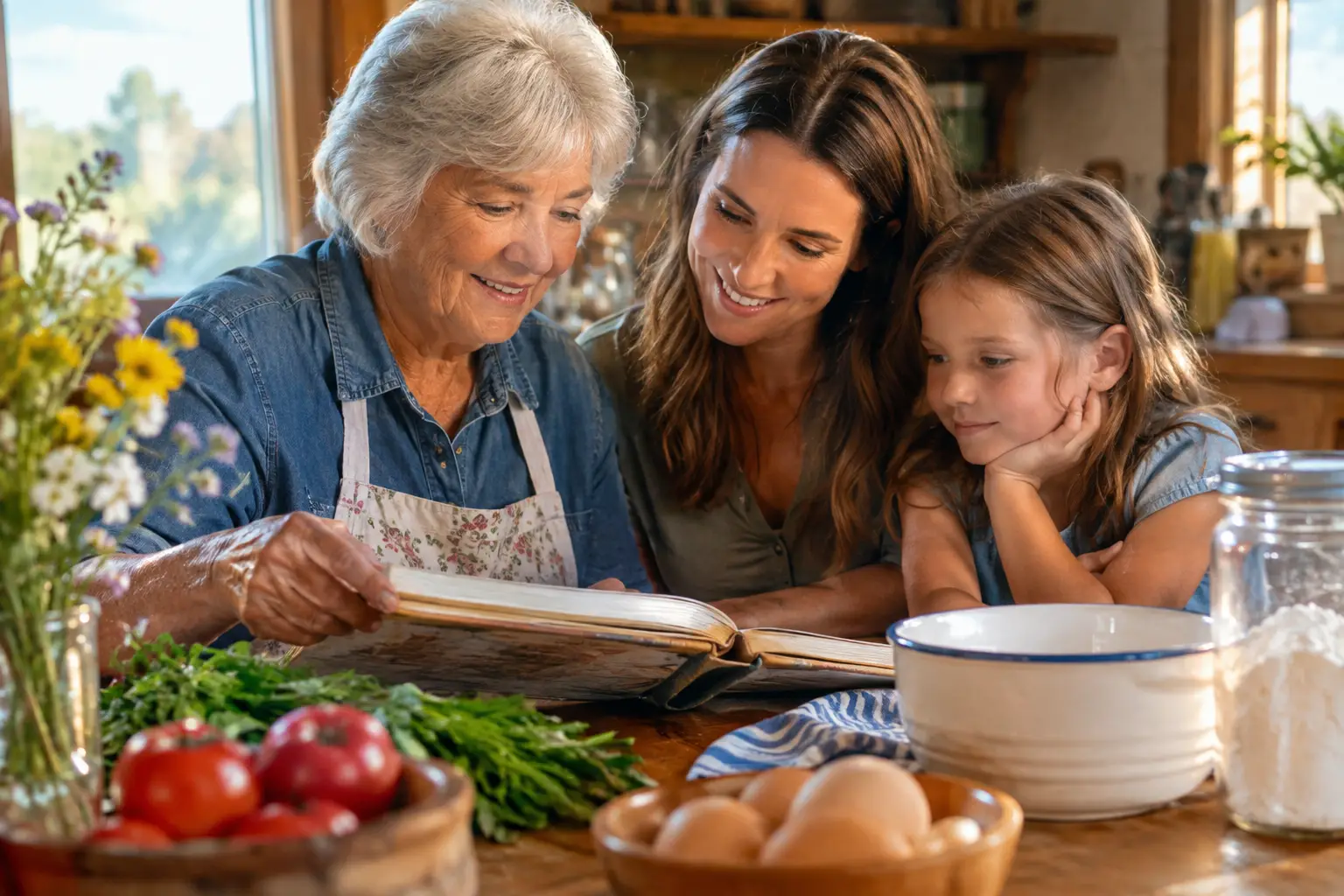
That grease-splattered index card tucked in a biscuit tin may not look like much, but it can carry half a century of Sunday suppers, hard times, holidays, and folks who knew exactly when the beans were done without ever setting a timer. Learning how to preserve family recipes is about more than saving ingredients. It is about keeping the people behind those meals close enough to hear them say, “Now don’t you go messin’ with it too much.”
A family recipe can disappear quicker than a pie at a church potluck. Ink fades. Paper gets lost in a move. Somebody takes the old recipe box home after a funeral, meaning to copy it, and Good Lord, nobody sees it again for twenty years. The good news is you do not need fancy equipment or a museum-sized budget to protect what your family cooked, loved, and passed around.
Start With the Recipes Folks Actually Talk About
Do not begin by trying to document every casserole ever made. That is a fine way to turn a heartfelt project into a chore you keep putting off until next winter. Start with the recipes that have a story attached to them.
Maybe it is your granddad’s deer camp chili, your aunt’s Christmas fudge, the cornbread that always showed up beside pinto beans, or a neighbor lady’s pound cake that became part of the family simply because she never let anybody leave hungry. Those are the recipes with roots.
Ask relatives a simple question: “What dish would it not feel like family without?” You will likely hear the same few answers more than once. That tells you where to begin.
Gather the handwritten cards, cookbooks with notes in the margins, folded scraps of paper, old church fundraiser cookbooks, and recipes saved on phones. Keep the original order at first. A recipe box has its own kind of history, including the card tucked behind the divinity recipe because somebody used it every December.
How to Preserve Family Recipes Without Losing Their Soul
A clean typed copy is useful, but it should not replace the original. Your mama’s slanted handwriting, a flour thumbprint, or the words “use a little more if needed” are part of the recipe’s character. Preserve both the instructions and the evidence of a life well lived in the kitchen.
Scan the original before you “clean it up”
Use a phone scanner, flatbed scanner, or a well-lit photo to create a digital image of every original card or page. Photograph both sides. Plenty of recipe cards have the ingredient list on one side and the real magic scribbled on the back: “Bake till it smells right” or “Papaw liked extra pepper.”
Save the image with a clear name, such as “Ruth_Henderson_Apple_Stack_Cake_Original.” Include the person’s full name when you know it. Fifty years from now, “applecakefinal2” will not help anybody much.
Make at least two digital backups. One can live on your computer or phone, and another should be stored on a separate drive or a secure cloud account. Technology is handy, but phones get dropped in creeks, laptops quit, and passwords get forgotten. Paper can burn, too. A backup is not being fussy. It is using common sense.
Type a version someone else can cook
Family recipes are famous for being wonderfully vague. “A scoop of flour,” “enough milk,” and “a hot oven” may make perfect sense to the person who made that dish every week for forty years. To a grandson living three states away, it may result in something better suited for fence post repair.
Type the recipe as written, then add tested measurements and temperatures in a separate note. Keep both versions if possible. For example, you might write: “Original says ‘bake in a moderate oven.’ Tested version: 350 degrees for 35 to 40 minutes in a 9-by-13-inch pan.”
That approach respects tradition without leaving the next cook stranded. Not every old recipe needs to be standardized, either. A pot of soup, stew, or beans may depend on taste and good judgment more than exact ounces. Say so plainly, and explain what the cook should look for, smell for, or feel as the food comes together.
Record the story beside the ingredients
The best family recipe collections read a little like a family reunion. Add a few lines about who made the dish, where it was served, and why it mattered. Was it made after hay baling? Did it show up at every Fourth of July picnic? Was it the first meal a young couple cooked in their first little house?
Write down the details that do not show up in a measuring cup. Maybe Uncle Ray always ate this cobbler cold for breakfast. Maybe your grandmother stretched the meatloaf with crackers during lean years, then kept doing it because everybody liked it better that way. These notes turn a recipe from a set of directions into a piece of family history.
If you can, record an elder telling the story in their own voice. A short phone video of somebody explaining how they make dumplings is worth its weight in cast iron. Their laugh, their phrasing, and that little pause before they say “now here’s the trick” are treasures all by themselves.
Cook the Recipes Together While You Still Can
There is no better way to preserve a recipe than to make it with the person who knows it best. Invite them over, set up the phone to record if they are comfortable with it, and let them lead. Do not rush them. The point is not to produce a spotless cooking show. The point is to learn why they add butter at that moment, why they never use a certain pan, or why the dough has to rest near the warm stove.
Pay attention to their tools, too. A well-seasoned skillet, a certain wooden spoon, or an old mixing bowl may affect the finished dish more than a written recipe admits. You do not need to preserve every kitchen gadget, but a photograph and a note can explain a whole lot later.
This is also where you catch the details recipes leave out. Watch how thick the gravy is before more milk goes in. Notice how brown the onions get. Learn what “soft peaks” look like from someone who has never called them that in her life. Ain’t that the truth? Country kitchens have taught plenty of fine cooking without a single culinary-school term.
Choose a System Your Family Will Actually Use
The fanciest recipe archive on earth is no good if nobody can find it. Pick a system that fits your people.
A printed family cookbook works well for relatives who love a book they can keep on the kitchen shelf. Include scanned handwriting on selected pages, typed recipes, photographs, and short stories. Leave blank space for future notes, because recipes are living things. Somebody will discover that a pinch of smoked paprika does wonders for the potato salad, and that deserves a place in the record.
A shared digital folder works well for families spread across the country. Organize it by person, holiday, meal, or type of dish. Keep file names consistent, and appoint one or two family members to add new recipes and check that backups are current.
Many families do best with both. Print the cookbook for hands-on use, then keep the original scans and videos digitally for safekeeping. The trade-off is a little more work up front, but it gives you a practical kitchen tool and a deeper archive for the long haul.
Give Credit Where It Belongs
Not every beloved recipe began with blood kin. Maybe it came from a church friend, a longtime neighbor, a coworker, or a local cookbook. Name the source honestly when you know it. “Ms. Clara’s Green Beans” tells a richer story than “Green Beans,” and it honors the generosity of the person who shared it.
If a recipe came from a published cookbook, label it as adapted rather than claiming it as family-original. There is nothing wrong with a recipe becoming part of your family’s tradition after somebody found it elsewhere. What matters is telling the truth about its journey.
For older recipes, be careful about changing names, places, or language in a way that erases their history. At the same time, use good judgment if a note contains something personal that living relatives would not want published. A family cookbook should bring folks together, not start a feud before dessert.
Make Room for the Recipes Being Written Right Now
Preserving heritage does not mean acting like the family cookbook closed in 1978. Add the new favorites, too. Your daughter’s game-day dip, your brother’s smoked ribs, the soup your family learned to love during a rough winter, or the birthday cake your kids request every year all belong in the story.
Ask younger relatives to contribute in their own words. Let them add a photo, a memory, or a quick note about what the dish means to them. That is how a recipe collection stays alive instead of becoming a dusty tribute nobody opens.
The next time the whole crew is gathered around a table, pull out a recipe card and ask who remembers it best. Somebody will tell a story nobody has heard in years. Somebody else will finally write down the secret to the gravy. And somewhere down the road, a child who never got to meet the original cook will still taste a little piece of home. That is worth protecting.