
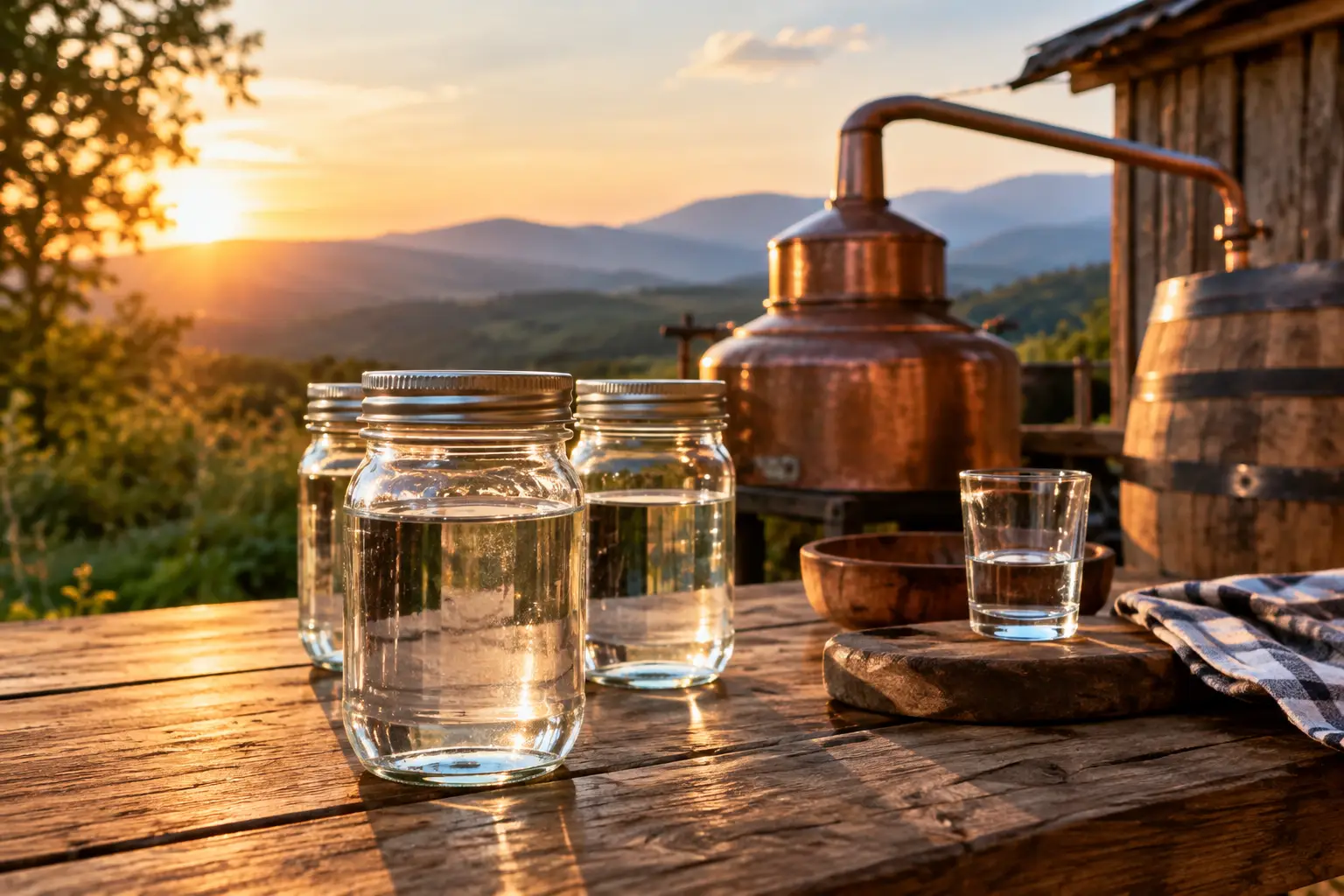
Somebody brings out an unmarked mason jar at a cookout, the fiddle music gets a little louder, and the same question comes around like it always does: is moonshine legal? The honest answer is less romantic than an old backroad story, but it is plain as day: it depends on what folks mean by “moonshine” and who made it.
The clear spirit on a store shelf with a label, tax stamp, and a licensed distillery behind it can be perfectly legal. The homemade, untaxed liquor cooked up without federal approval? That is a different critter altogether. A family recipe, a clean shed, and good intentions do not turn an unlicensed batch into lawful spirits. Good Lord, the law is not known for being sentimental about a mason jar.
Is Moonshine Legal Under Federal Law?
Under federal law, producing distilled spirits without the proper federal authorization is illegal, even when it is strictly for personal use, never sold, and made from an old family recipe. That is the part that catches many folks off guard.
Homebrewing beer and making wine for personal or family use are generally allowed within federal limits. Distilling liquor is not given that same home-use exception. Alcohol distilled from corn, sugar, fruit, or any other fermentable ingredient falls under a far tighter set of federal rules.
Legal distilleries operate with federal approval and comply with detailed requirements for their premises, production, records, taxes, labeling, and distribution. Those rules are enforced through the Alcohol and Tobacco Tax and Trade Bureau, along with other federal and state authorities. It may not sound as free-and-easy as Grandpa’s stories, but those rules are what separate a legitimate bottle from illicit liquor.
The word “moonshine” itself is not the legal issue. It is a cultural word, not a special legal category. It once commonly meant illegally distilled, untaxed spirits made under the moonlight, away from the tax man and local law. Today, many licensed distilleries proudly use the name for legal corn whiskey, white whiskey, flavored spirits, and clear unaged liquor.
So yes, you can legally buy a product called moonshine. No, calling a homemade spirit “moonshine” does not make it legal, and calling it something else does not either. A jar by any other name still has to follow the law.
Why Moonshine Has Such a Strong Backwoods Reputation
Moonshine did not become part of American folklore because people loved breaking rules for sport. Its roots run through hard times, isolated mountain communities, farm economics, and a deep suspicion of distant authorities telling local people what to do with their own grain and fruit.
In many rural places, turning a crop into spirits was practical. Corn was easier to store and move once it had been distilled. Fruit that would spoil could become brandy. During periods when taxes were high or alcohol was prohibited outright, plenty of otherwise decent, hardworking people saw making liquor as a way to keep food on the table.
That history deserves respect, not cheap jokes about country folks hiding from the law in overalls. Moonshining stories are stories of ingenuity, grit, family knowledge, and communities making do. They are also stories tied to real legal consequences. Both things can be true at once.
Today’s legal craft distilleries carry some of that heritage forward in the open. They source local grain, honor regional recipes, preserve old-school flavors, create jobs, and bring visitors to small towns. That is a mighty fine way to celebrate tradition without putting somebody’s livelihood, license, or freedom on the line.
Can You Own a Still?
Owning a still is not automatically illegal everywhere in the United States, but this is where folks need to slow down and read the fine print. State laws can differ, and the intended use matters a great deal.
A still may be owned for lawful purposes such as display, making essential oils, producing distilled water, or certain permitted commercial uses. But possessing equipment with the intent to distill beverage alcohol without the required approvals can create serious trouble. Some states place additional limits on owning, selling, or using distilling equipment.
There is no nationwide “small still” loophole for making drinking liquor at home. A tiny countertop setup does not get a free pass just because it looks like something out of a science fair. Nor does a batch become legal because nobody sells it, nobody gets paid, or it is only shared with close friends.
If a person is considering buying distilling equipment, the smart country move is to check current federal guidance and the laws in their own state before spending a dime. Laws change, and local enforcement can vary. When the consequences include fines, seizure of property, and possible criminal charges, guessing is a poor substitute for knowing.
What About Buying and Drinking Moonshine?
Buying legal moonshine from a properly licensed distillery, retailer, bar, or restaurant is generally lawful for adults of legal drinking age, subject to the rules where they live. That bottle might come in a mason jar, but if it was made and sold through the legal system, it is a legitimate commercial spirit.
The same common-sense rules apply as they do to bourbon, vodka, or any other liquor. Do not drink and drive. Do not serve minors. Be aware that shipping, carrying alcohol across state lines, public possession, and open-container laws can vary by state and locality.
Buying unlabeled homemade liquor is another matter. There is no reliable way for a buyer to know how it was produced, whether it was legally made, or what is actually in it. Beyond the legal concern, unregulated alcohol can be risky. A label is not just fancy packaging. At a lawful distillery, it is part of a system of accountability.
That does not mean every old-timer’s tale needs a lecture at the family reunion. It means grown folks ought to know the difference between respecting heritage and taking needless chances. Ain’t that the truth.
Legal Moonshine Is Keeping the Tradition Alive
The good news for anyone who loves mountain culture, corn liquor history, and a proper distillery tour is that the legal side of the business is full of character. Across the country, distillers are making white whiskey and moonshine-style spirits with local ingredients, regional pride, and plenty of old-fashioned storytelling.
Some lean into traditional corn-forward flavor. Others bottle fruit spirits, honey-infused liquor, or flavored products designed for sipping or mixing. Not every bottle will taste like the clear fire from a legendary family tale, and that is okay. Legal distilling is both a preservation project and a modern small-business endeavor.
Supporting licensed distilleries can support farmers, warehouse workers, truck drivers, tasting-room staff, musicians playing local events, and towns looking for honest economic opportunity. It gives visitors a chance to learn where the tradition came from without treating rural history like a costume party.
There is also a difference between enjoying a heritage and claiming one you do not have. The best distilleries tend to tell the truth about their recipes, their region, and their people. They do not need to invent a midnight chase through the hills to make a good bottle worth trying.
The Bottom Line for Country Folks
Moonshine is legal when it is made, labeled, taxed, and sold by businesses that have the required federal, state, and local approvals. Homemade distilled liquor made without those approvals is illegal under federal law, even if it never leaves the property and even if the recipe has been in the family longer than the old pickup by the barn.
That answer may not have the outlaw sparkle some folks hoped for. But respecting the law does not mean turning your back on the people and places that built the legend. Tell the stories. Visit the distilleries. Raise a glass of the legal stuff with good friends. Keep the heritage alive in a way that lets the next generation enjoy it too – without anybody having to explain a mason jar to a judge.